
You're standing in the shower four months after giving birth, and there's a small bird's nest of hair tangled around your fingers. You didn't shed during pregnancy. You didn't shed the first two months. Now, suddenly, it feels like half your hair is leaving — and no one warned you. You're not losing your hair. You're losing the extra hair pregnancy gave you. Roughly 40 to 50% of new mothers experience this, and it follows a predictable, recoverable timeline.
The clinical name is postpartum telogen effluvium, and unlike stress-driven shedding or long-term hormonal thinning, it has a clear start, a clear peak, and a clear end. This guide walks you through what's happening month by month, what's normal versus a red flag, and the nursing-safe protocol that helps your hair recover faster.
What Is Postpartum Hair Loss? The 10-Second Science
Short answer: Pregnancy hormones lock your hair in the growth phase. When those hormones crash after birth, all that "paused" hair sheds at once — usually around month three or four postpartum.
For support through the regrowth months, the Postpartum Hair Loss Kit combines a daily hair supplement (biotin, collagen and vitamin D3) with a niacinamide scalp serum. Nursing? Check with your doctor first.
Telogen Effluvium in Plain English
On a normal day, about 90% of your hair is actively growing (the anagen phase) and 10% is resting (the telogen phase). Resting hairs eventually shed to make room for new ones — that's the 50 to 100 hairs you naturally lose every day.
During pregnancy, high estrogen levels keep nearly all your hair stuck in the growth phase. That's why your hair felt thick, glossy and full. After delivery, estrogen plummets, and a much larger percentage of hair shifts into telogen all at once. About 90 days later, those hairs release — together. The American Academy of Dermatology classifies this as a normal, self-resolving form of telogen effluvium.
Why the Estrogen Drop Triggers the Shedding Cascade
Within 24 to 48 hours of delivery, estrogen and progesterone fall by more than 90%. The follicles that were artificially extended during pregnancy receive the biological signal to release. The shed itself isn't dangerous — it's a synchronized reset. The good news: the follicles stay intact. They are not dying, scarring, or being permanently damaged.
Scientific Insight: A 2024 review in the Journal of Drugs in Dermatology confirmed that postpartum telogen effluvium resolves spontaneously in over 95% of cases within 6 to 12 months, with full density typically restored by month 12.
The Month-by-Month Postpartum Hair Loss Timeline
Short answer: Shedding usually starts at month 3, peaks around month 4, slows by month 6, and is fully recovered between months 9 and 12.
Month 1–2: Why You're Not Shedding Yet
You may notice your hair still feels pregnancy-thick. That's because the hormonal "pause" hasn't fully released. Some women shed earlier (week 6–8), but most see no change yet. What to do now: establish a gentle scalp-care routine, prioritize iron-rich foods, and avoid tight ponytails — your follicles will need every advantage in 6–8 weeks.
Month 3–4: Peak Shed — What's Normal vs. What's Not
This is when most mothers panic. Daily shedding can jump from 100 hairs to 300–400, especially in the shower and when brushing. You may notice a thinning hairline, a wider part, or visible scalp at the temples. This is the peak — and it is normal.
Red flags that are NOT normal postpartum shedding:
- Round bald patches the size of a coin (possible alopecia areata)
- Burning, itching or tenderness on the scalp
- Shedding that suddenly worsens after month 6 instead of slowing
- Brittle nails + extreme fatigue (possible iron or thyroid issue)
If any of these apply, ask your provider for a CBC, ferritin and full thyroid panel — postpartum thyroiditis affects about 5% of women and mimics telogen effluvium.
Month 5–6: Regrowth Begins — the "Halo" of Baby Hairs
The shed slows noticeably. Look at your hairline in good light: you'll likely see a halo of short, soft, vertical "baby hairs" 1–3 cm long around your temples, forehead and part. Those are not flyaways. That is your hair growing back. They will look unruly for a few months — this is regrowth, and it is the single best sign your timeline is on track.
Month 7–12: Full Recovery With Visible Benchmarks
By month 7–8, baby hairs reach 5–8 cm and start to blend in. By month 9–10, ponytail thickness measurably improves. By month 12, the vast majority of women are back to their pre-pregnancy density. Hair grows roughly 1 cm per month, so full length recovery (if you had long hair) can take 18–24 months — but density and coverage are restored within a year.
Is It Postpartum Shedding or Something Else?
Short answer: If shedding starts before month 2 or continues to worsen past month 6, it's likely not just postpartum telogen effluvium. Get bloodwork.
Common postpartum confounders that look identical to telogen effluvium:
- Iron-deficiency anemia: blood loss during delivery + breastfeeding can deplete ferritin. Hair loss responds quickly to repletion.
- Postpartum thyroiditis: usually appears 4–12 months postpartum; combined with weight changes, mood shifts and fatigue.
- Vitamin D deficiency: common in winter months and in women who exclusively breastfeed without supplementation.
- Androgenetic thinning unmasked by pregnancy: if your mother or sister had female-pattern thinning, postpartum can be the trigger that reveals it.
Not sure which category fits you? Take our 2-minute Hair Quiz to get a personalized starting point.
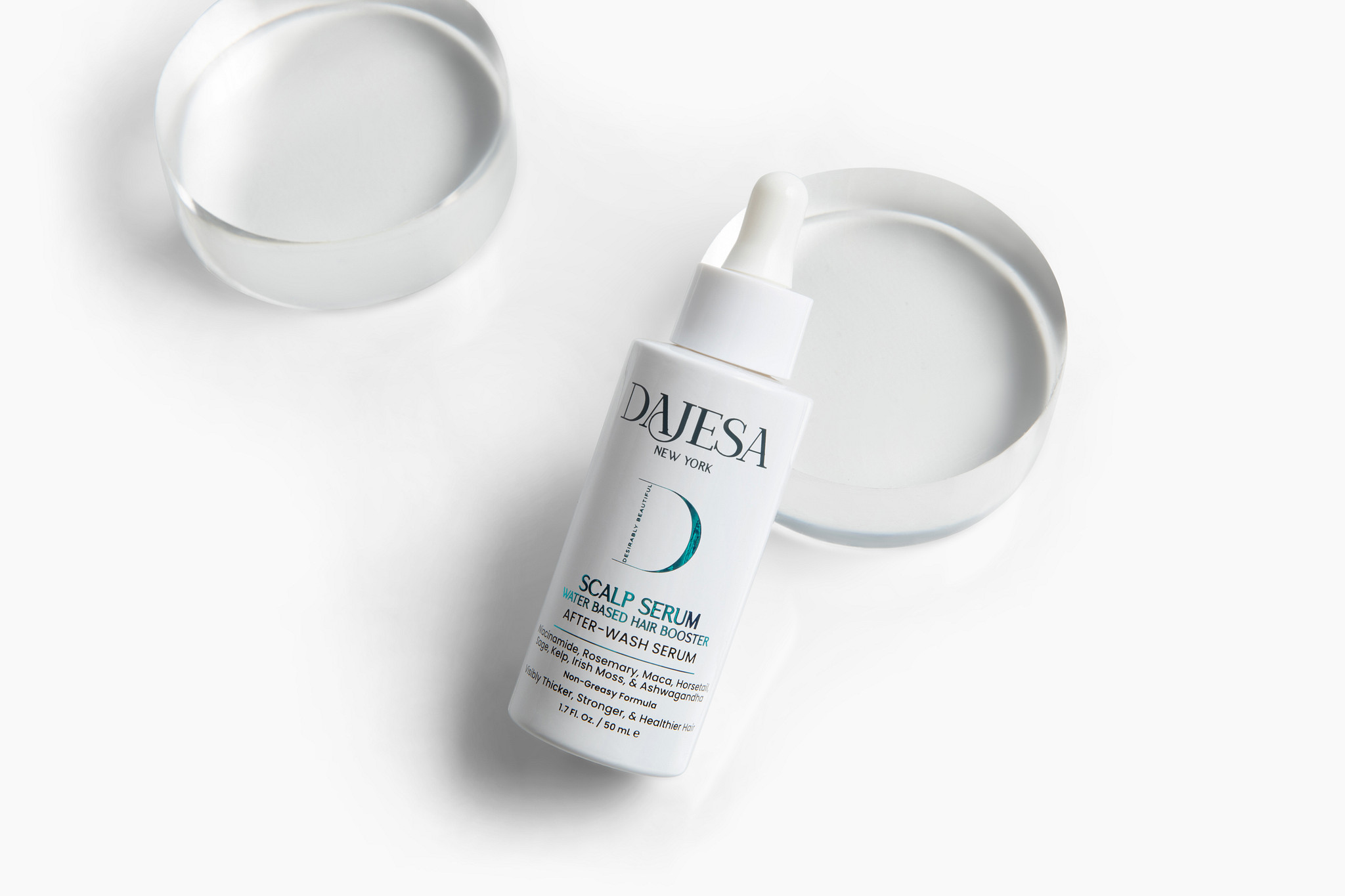
Scalp Serum
A lightweight, leave-on scalp serum powered by 10 botanical adaptogens and clinically-inspired actives that care for the scalp where hair begins.
Nursing-Safe Protocol: What Actually Helps
Short answer: Topical scalp care is generally safe during breastfeeding because absorption is minimal. Oral supplements should be checked individually — most B-vitamins, iron, and collagen are fine; high-dose biotin and certain herbal blends are not.
Scalp Serum: Why Ingredient Selection Matters During Lactation
Your scalp barrier is under more strain postpartum: hormonal shifts, sleep deprivation and reduced shower time all weaken the microbiome that supports follicles. A niacinamide-based scalp serum works locally to reduce inflammation, support the barrier, and improve the environment around the follicle as it transitions back to the growth phase. Niacinamide (vitamin B3), used topically, is widely considered safe during breastfeeding because systemic absorption from a few drops on the scalp is minimal.
What to avoid in nursing-safe scalp care: minoxidil (oral or topical), prostaglandin analogs, and essential-oil-heavy formulas applied near the breast area.
Nutraceutical Stack: Iron, Biotin, Collagen — What's Safe and Effective
Internal support during recovery focuses on the building blocks your body is sharing with your baby. The most evidence-supported nutrients postpartum are:
- Iron + Vitamin C: ferritin under 50 ng/mL is strongly associated with hair shedding. Always test before supplementing.
- Marine collagen peptides (10–15g): support keratin synthesis without affecting milk supply.
- Vitamin D3 (1,000–2,000 IU): low D is one of the most under-diagnosed postpartum deficiencies.
- Zinc and B-complex: essential for hair shaft formation and follicular cycling.
A note on biotin: very high doses (5,000+ mcg) can interfere with thyroid lab tests — important if your provider is monitoring you for postpartum thyroiditis. Stick with the dosage in a balanced formula rather than mega-dosing.
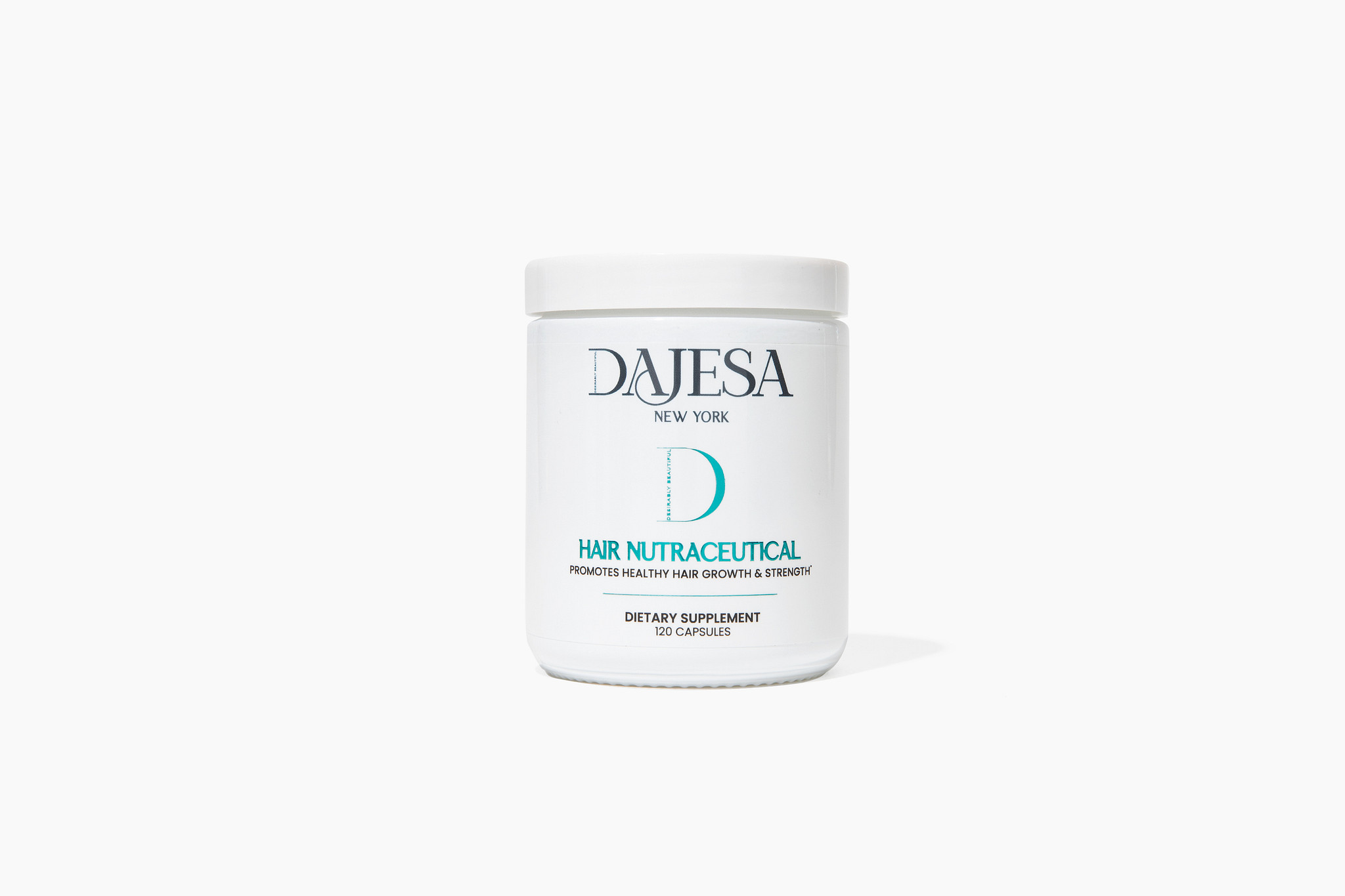
Hair Nutraceutical
A comprehensive daily hair supplement delivering 11 essential vitamins and minerals, 500 mg of collagen peptides, and a 460 mg proprietary blend of...
Always confirm with your OB or pediatrician before starting any new supplement while breastfeeding.
Postpartum Hair Loss FAQ
When does postpartum hair loss start?
Most women notice it between 2 and 4 months after delivery, with peak shedding around month 3–4. The 90-day delay reflects the time it takes for follicles to transition from the resting phase into active shedding after the postpartum estrogen drop.
How long does postpartum hair loss last?
Active shedding usually lasts 3 to 6 months. Most women see noticeable regrowth by month 6 and are back to pre-pregnancy density between months 9 and 12. Length recovery takes longer — about 1 cm of new growth per month.
Is postpartum hair loss permanent?
In over 95% of cases, no. The follicles are not damaged — they're cycling. Permanent thinning postpartum is rare and usually points to an underlying issue like genetic female-pattern thinning, thyroid disease, or severe nutrient deficiency that needs separate treatment.
Can I take biotin while breastfeeding?
Biotin in normal multivitamin or postnatal doses is considered safe. Avoid mega-doses (5,000 mcg or more) because they can interfere with thyroid lab tests — which is especially important postpartum, when thyroid screening is common. Always check with your provider.
When should I see a doctor?
See a provider if you have round bald patches, scalp pain or burning, shedding that worsens after month 6, or hair loss combined with extreme fatigue, weight changes, or mood shifts. Ask for a CBC, ferritin, vitamin D and full thyroid panel.
How fast does hair grow back postpartum?
Hair grows about 1 cm (roughly half an inch) per month. You'll usually see baby hairs at the hairline by month 5–6, blendable length by month 9–10, and full pre-pregnancy density around month 12.
Does postpartum hair loss happen after every pregnancy?
Not necessarily — and severity often varies between pregnancies. Some women shed dramatically after their first child and barely at all after the second; others see the opposite. It depends on hormonal sensitivity, nutrient status, stress, sleep and breastfeeding duration.
What vitamins help postpartum hair regrowth?
The most evidence-supported nutrients are iron (with vitamin C for absorption), vitamin D3, zinc, B-complex vitamins, and marine collagen peptides. A balanced postnatal-friendly formula is more effective and safer than mega-dosing single nutrients.
Ready to support your recovery? Take our 2-minute Hair Quiz to build your postpartum routine — or shop the scalp serum and hair nutraceutical together as your nursing-safe recovery stack.