
If you've spent time in the skincare world, you know niacinamide. It strengthens the skin barrier. It reduces excess sebum. It calms inflammation. It makes pores look smaller. It's in half the serums on your shelf. But here's the thing: your scalp is skin. And it responds to niacinamide in exactly the same ways — with one critical bonus that your face doesn't get: it directly supports the follicle's ability to grow hair.
This is the core of DAJESA's "skincare for your scalp" approach. We took the most validated active in the skincare category and applied it where nobody thought to look — at the root. Here's the science behind why it works.
Niacinamide Hair Benefits: The Four That Are Actually Documented
Ask what the niacinamide benefits for hair really are and the honest list is short, specific, and all of it happens at the scalp rather than on the strand:
- A stronger scalp barrier, which holds moisture and keeps irritants away from the follicle opening.
- Less surface oil, so the follicle isn't sitting in a clogged, oxygen-poor pocket.
- Lower background inflammation, the quiet kind that drives follicle miniaturisation before you ever notice thinning.
- More metabolic fuel for keratin, because niacinamide feeds the NAD+ pathway that follicle cells run on.
Those are the niacinamide scalp benefits worth paying for, and they are why niacinamide hair growth claims need reading carefully. Notice what is not on the list: niacinamide does not force new growth, and it is not a replacement for medical treatment of hair loss. What it does is fix the conditions that were working against the hair you already have.
What Does Niacinamide Do for Your Hair and Scalp?
Used on the scalp, niacinamide (Vitamin B3) operates through four distinct mechanisms, all of them at skin level rather than on the strand. This is what niacinamide for scalp health actually means in practice:
- Strengthens the scalp barrier: A healthy scalp barrier retains moisture and blocks environmental aggressors. When the barrier is compromised (by over-washing, hard water, or inflammation), follicles become exposed to stressors that inhibit growth. Niacinamide rebuilds ceramide production, restoring that protection.
- Regulates sebum: Excess sebum accumulates around the follicle opening, creating a clogged, oxygen-poor microenvironment. Niacinamide has demonstrated a 52% reduction in sebum excretion in published dermatology studies — a cleaner follicle environment means stronger, faster-growing hair.
- Reduces scalp inflammation: Chronic low-grade inflammation (often invisible, often caused by product buildup, hormones, or diet) is one of the most common and overlooked causes of hair thinning. Niacinamide inhibits the same inflammatory cytokines that drive follicle miniaturization.
- Supports keratin production: Niacinamide is a precursor to NAD+ and NADP+, coenzymes essential to cellular energy metabolism — including the metabolic activity of hair follicle cells. More energy at the follicle means more robust keratin synthesis and thicker individual strands.
Clinical Evidence: A 2021 study published in the Journal of Cosmetic Dermatology found that topical niacinamide at 2–5% concentration significantly improved hair density and reduced scalp seborrhea after 12 weeks of daily use. DAJESA's Scalp Serum uses the clinically validated 5% concentration.
Niacinamide and Scalp Sebum: What the Study Actually Measured
The niacinamide scalp sebum study people cite is a sebum excretion rate measurement, not a hair count. Researchers measured how much oil the skin put out over a fixed window and recorded roughly a 52% drop with topical niacinamide. That is worth understanding precisely, because it is the mechanism most often oversold.
Less sebum does not grow hair. What it does is change the neighbourhood the follicle lives in. Sebum that accumulates around the follicle opening oxidises, traps debris, and feeds the microbes behind flaking and itch. Clear that, and the follicle stops spending its energy on defence. If your scalp is oily by lunchtime, or you wash daily just to feel clean, this is the mechanism doing the most work for you.
Niacinamide vs. Minoxidil: A Fundamentally Different Mechanism
Minoxidil forces blood vessels to dilate — it's a vasodilator originally developed to treat high blood pressure. It works for some types of hair loss but comes with a significant catch: a "dread shed" (initial worsening of shedding when starting), dependency (hair often re-thins when stopped), and cardiovascular side effects in some users.
Niacinamide works upstream. Instead of forcing circulation, it improves the environment that allows follicles to produce healthy hair: barrier damage, inflammation, sebum accumulation. That is a supporting role, and it is worth being exact about what it is not. Niacinamide is not a regrowth treatment and does not replace minoxidil for female pattern hair loss — the published review on this concluded topical niacinamide does not stimulate hair growth. The two solve different problems, and for many women the sensible answer is not to choose between them. We break the whole comparison down, with the evidence on both sides, in niacinamide vs minoxidil: what each one actually does. See also our scalp skincare guide.
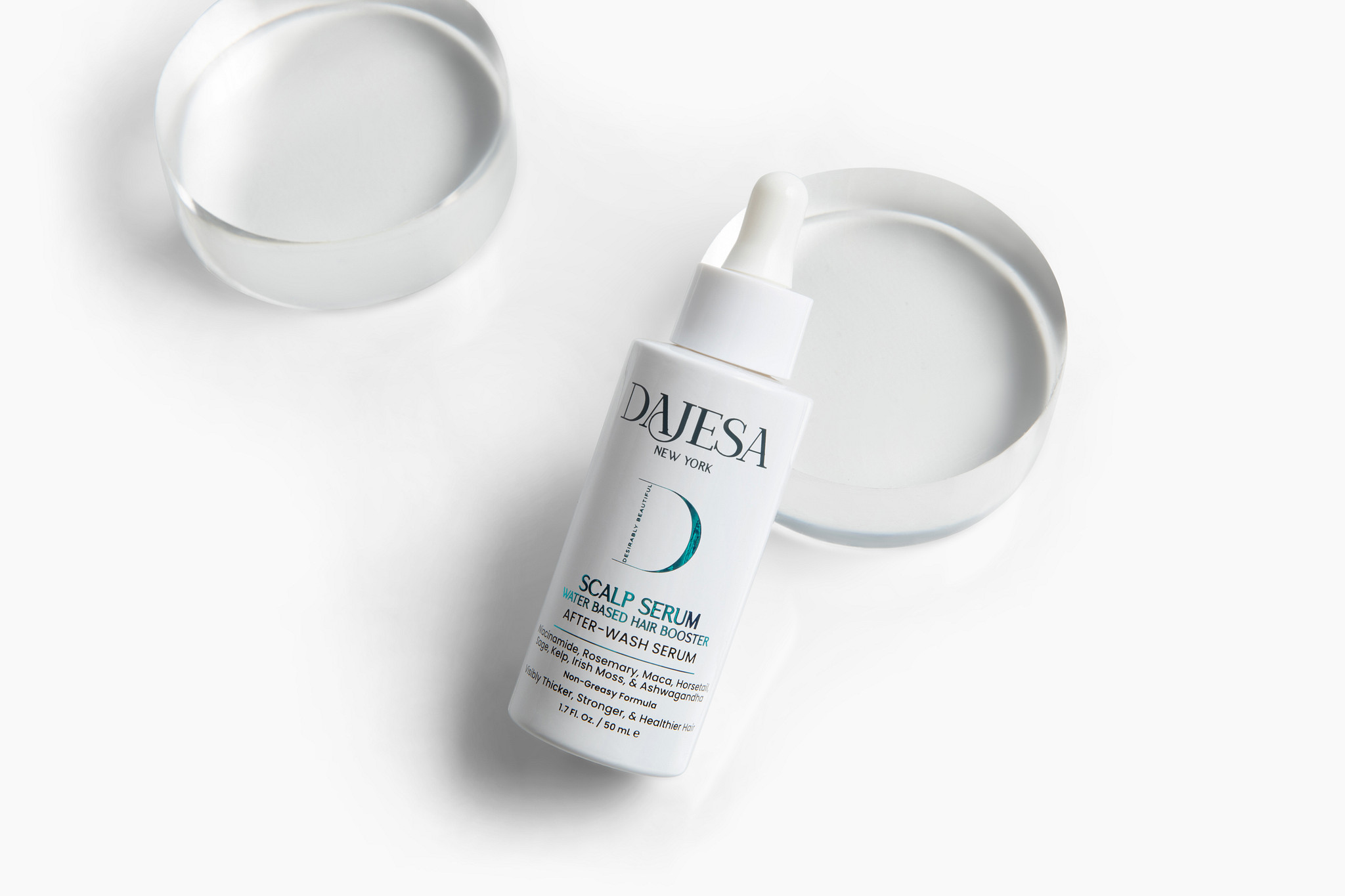
Scalp Serum
A lightweight, leave-on scalp serum powered by 10 botanical adaptogens and clinically-inspired actives that care for the scalp where hair begins.
Niacinamide for Hair Loss: What It Can and Can't Do
Straight answer, because this is where most pages get vague. Niacinamide is not a hair loss treatment. It is not approved to treat androgenetic alopecia, it will not reverse a receding hairline, and anyone selling it as a minoxidil substitute is overreaching.
The published position is stronger than that, and we would rather cite it than talk around it. A 2020 review in the International Journal of Cosmetic Science examined the existing body of evidence and concluded that topical niacinamide does not stimulate hair growth, finding no VEGF stimulation across a broad dose range (Oblong & Peplow, PubMed 31955438). An older 2005 pilot on topical niacin derivatives in female pattern alopecia reported increased fullness, but it was small, it studied niacin derivatives rather than niacinamide, and it does not overturn the later review. We sell a serum containing this ingredient, so being clear about that boundary matters more than being persuasive: the case for niacinamide is the scalp, not regrowth. The full comparison is in niacinamide vs minoxidil.
Where niacinamide hair loss support is genuinely reasonable is shedding driven by a hostile scalp: seborrhoeic buildup, barrier damage from over-washing or hard water, and the chronic irritation that keeps follicles in a defensive state. Those are common in women, frequently missed, and they respond to scalp care. If your shedding started after a stressor — a birth, an illness, a crash diet, a new medication — the shedding itself is telogen effluvium and it needs the cause addressed; niacinamide supports the recovery rather than driving it. Our guide to hair shedding in women walks through telling those apart.
The Right Concentration — and Why It Matters
Not all niacinamide is created equal. The concentration determines efficacy:
- Under 2%: Insufficient to produce measurable follicle-level changes. Common in mass-market products as a marketing ingredient rather than an active one.
- 2–4%: Moderate barrier benefits. Limited sebum and inflammation control.
- 5% (the sweet spot): Full spectrum of benefits — barrier repair, sebum regulation, anti-inflammatory, and keratin support. This is the concentration used in peer-reviewed studies. Higher concentrations (above 10%) can cause irritation without additional benefit.
How to Use Niacinamide on Your Scalp
Application method matters as much as concentration. Niacinamide needs direct contact with the scalp, not the hair shaft. Apply to a parted, dry or slightly damp scalp. Massage lightly to distribute. Leave in — don't rinse. Apply after washing (not before) so the barrier is clean and receptive. Do this daily for 8+ weeks before assessing results.
Two mistakes account for most of the disappointment. The first is treating it like a hair product and running it down the lengths, where it does nothing — niacinamide on scalp skin is the whole point. The second is using it twice a week. The barrier and anti-inflammatory effects are cumulative, so an occasional niacinamide scalp treatment never reaches the threshold that daily use does.
How Long Niacinamide Takes to Work on Hair
Scalp comfort first, density much later. Most people notice the scalp changes — less oil by evening, less itch, less flaking — somewhere in weeks 4 to 6. Changes you can see in the mirror depend on the follicle finishing a growth cycle, so they land closer to weeks 8 to 12, and are easier to photograph than to feel.
That timeline is not marketing softness, it is how hair works. A follicle that improves its conditions this month is producing the strand you will notice next season. Judge it at 90 days, in the same light, with the same parting.
Niacinamide Side Effects on the Scalp
Niacinamide is among the better-tolerated actives in cosmetic dermatology, which is much of why it ended up in everything. The realistic niacinamide for hair side effects are mild and uncommon: transient flushing or warmth on application, and stinging if the scalp is already broken from scratching, sunburn, or a recent chemical service.
Irritation is far more often a concentration problem than a niacinamide problem. Above roughly 10% the tolerance advantage disappears without buying extra benefit, which is another argument for 5%. If you are patch-testing, use the skin behind the ear and give it 24 hours. And if a scalp reaction is persistent, painful, or spreading, that is a dermatologist question, not a formulation question.
Niacinamide Hair Serums: What to Look For
Niacinamide in hair products is everywhere now, and most labels list it and stop there, which tells you nothing. Three things separate a working niacinamide scalp serum from an ingredient-deck decoration:
- A stated percentage. If the label won't say, assume it is under 2% and priced as if it weren't.
- A scalp applicator. A nozzle that parts hair and reaches skin, not a pump built for lengths.
- A leave-in, water-based base. Anything you rinse gives the active minutes instead of hours, and anything oil-heavy defeats the sebum benefit you came for.
Judged on those three, most of what markets itself as a niacinamide serum for hair growth fails on the first one. DAJESA's Scalp Serum and Total Vitamin Hair Serum both run 5% niacinamide in a leave-in, water-based format.
Pairing Niacinamide with Other Actives
Niacinamide is a collaborative ingredient — it enhances the efficacy of everything around it:
- With Rosemary Extract: Rosemary stimulates circulation; niacinamide strengthens the environment that receives that circulation. Together they create a compound effect on follicle reactivation. A 2015 trial in Skinmed showed rosemary oil performed comparably to 2% minoxidil for androgenetic alopecia after 6 months.
- With Adaptogens (Ashwagandha, Maca Root): Adaptogens suppress cortisol-driven shedding. Niacinamide addresses the topical inflammation that cortisol elevates. Internal + external working in parallel.
- With Collagen Peptides: Collagen provides the structural amino acids (glycine, proline, hydroxyproline) that form keratin. Niacinamide ensures the follicle environment can actually use those amino acids efficiently. See our breakdown of liquid collagen vs. biotin for the full stack picture.
Total Vitamin Hair Serum
A lightweight, leave-on styling serum that wraps each strand in a protective veil of vitamin-rich oils and advanced silicones. Provides thermal...
Niacinamide Scalp FAQ
What concentration of niacinamide do I need for hair growth?
5% is the clinically validated concentration for scalp benefits. This is the level used in published research demonstrating improvements in hair density, sebum regulation, and barrier function. Under 2% is insufficient for measurable follicle-level change. DAJESA's Scalp Serum and Total Vitamin Hair Serum both use 5% niacinamide.
Can I use niacinamide on my scalp every day?
Yes — and you should. Unlike exfoliating acids or retinoids, niacinamide is gentle enough for daily use on the scalp without barrier disruption. Consistent daily application is actually more effective than intermittent use because niacinamide's barrier and anti-inflammatory benefits compound over time.
How long until I see results from niacinamide on my scalp?
Most users notice scalp texture improvements (less oiliness, less itching, improved moisture balance) within 4–6 weeks. Hair density and thickness improvements — which require follicle-level changes — typically become visible around week 8–12. The hair growth cycle takes time; think of niacinamide as a 90-day investment, not a 2-week fix.
Is niacinamide safe for color-treated or chemically processed hair?
Yes. Niacinamide is applied to the scalp, not the hair shaft, so it doesn't interact with color molecules. It actually benefits color-treated scalps because chemical processing often compromises the scalp barrier — exactly what niacinamide is designed to repair. It can help extend the healthy scalp environment between color appointments.
Does niacinamide help with hair growth?
Indirectly, and that distinction matters. Niacinamide does not signal a follicle to grow the way minoxidil does. It removes the things working against growth — barrier damage, excess sebum, low-grade inflammation — so the follicle can complete a healthy cycle. In a 12-week trial at 2–5% that showed up as improved density and less scalp seborrhoea.
What does niacinamide do to hair?
Almost nothing directly to the strand — its work happens at the scalp. It restores ceramide production in the barrier, lowers sebum output, calms inflammatory cytokines, and feeds the NAD+ pathway follicle cells use for keratin synthesis. Hair that grows out of a healthier scalp tends to be thicker at the root and less prone to breakage.
Is niacinamide good for scalp health specifically?
It's one of the few actives with direct evidence on scalp skin rather than facial skin. Oily scalps, flaking, and post-wash tightness all trace back to barrier and sebum dysfunction, which is exactly the pair niacinamide addresses. It's gentle enough for daily use, which matters because the benefits are cumulative.
Are there niacinamide side effects for hair or scalp?
Uncommon and mild. Some people feel brief warmth or flushing on application; a scalp that is already broken from scratching or a recent chemical service may sting. Most irritation comes from concentrations above 10%, which add no benefit over 5%. Patch-test behind the ear for 24 hours, and see a dermatologist for any persistent or spreading reaction.
Niacinamide vs minoxidil — which should I use?
They solve different problems. Minoxidil is a vasodilator that pushes follicles into growth, with a dread-shed phase and results that reverse when you stop. Niacinamide improves the scalp environment instead, so it suits shedding tied to scalp health, stress, postpartum recovery, or medication. For diagnosed androgenetic alopecia, minoxidil has the evidence and niacinamide is a support, not a substitute.
Ready to add 5% niacinamide to your scalp routine? Explore our complete scalp health guide — and see how niacinamide fits into a full scalp care protocol.