
Direct answer: Niacinamide and minoxidil are not alternatives to each other. Minoxidil is an FDA-approved regrowth drug with decades of trial evidence in women. Niacinamide is a scalp-care ingredient with no evidence that it stimulates growth. They solve different problems, and for many women the honest answer is to use minoxidil for regrowth and niacinamide for the scalp underneath it.
The Short Version, Side by Side
| Minoxidil | Niacinamide | |
|---|---|---|
| What it is | A drug. Originally a blood-pressure medication, now topical for hair loss. | A cosmetic ingredient. Vitamin B3, used in skincare for barrier and oil balance. |
| Does it regrow hair? | Yes, with regulatory approval and randomized trials in women behind it. | No. The published review concluded it does not stimulate hair growth. |
| What it is actually for | Androgenetic alopecia: female pattern thinning, widening part, reduced density. | The scalp itself: barrier comfort, oil balance, buildup, irritation. |
| What happens if you stop | Regrowth is generally lost. It requires ongoing use. | Scalp comfort gradually returns to baseline. Nothing is "lost". |
| Can they be combined? | Generally yes, and this is the most common sensible answer. Ask a clinician about your own routine. |
What the Evidence Says About Niacinamide and Hair Growth
This is where most pages go quiet, so here it is plainly. A 2020 review in the International Journal of Cosmetic Science by Oblong and Peplow examined the existing body of evidence and concluded that topical niacinamide does not stimulate hair growth, finding it could not stimulate VEGF synthesis across a broad dose range (PubMed 31955438).
There is an older, much smaller pilot study from 2005 on topical niacin derivatives in female pattern alopecia that reported increased hair fullness, possibly via increased scalp blood flow. It is a pilot, it studied niacin derivatives rather than niacinamide specifically, and it does not overturn the later review.
We sell a scalp serum containing niacinamide, so it would be easy to be vague here. We would rather say it clearly: if your goal is regrowth, niacinamide is not the ingredient that does that. Anyone marketing it as a minoxidil substitute is overreaching.
What the Evidence Says About Minoxidil in Women
Minoxidil has the record niacinamide does not. A Phase III multicentre randomized trial of 5% minoxidil topical foam once daily against vehicle over 24 weeks found improved scalp coverage and increased hair density in women with female pattern hair loss (PubMed 27391639). A separate randomized trial in 113 women found once-daily 5% foam non-inferior to twice-daily 2% solution (PubMed 21700360). The FDA approved 5% minoxidil foam for female pattern hair loss in 2014.
The trade-offs are real and worth knowing before you start. Some users see a temporary increase in shedding in the first weeks as follicles shift cycle. Results depend on continued use. And it is a drug, so it deserves a conversation with a clinician rather than a checkout button.
So Why Use Niacinamide at All?
Because regrowth is not the only thing happening on a thinning scalp, and it is not always the first problem to solve.
A scalp that is inflamed, stripped by over-washing or hard water, or congested with sebum and product buildup is a hostile environment for whatever else you apply to it. Niacinamide is used in skincare for exactly this: barrier support and oil balance. That is a supporting role, not a growth claim, and it is a legitimate one.
There is also a practical argument. Minoxidil can cause scalp irritation and dryness, and irritation is one of the most common reasons people abandon it. A treatment you stop at week eight does nothing. Keeping the scalp comfortable is part of finishing the course.
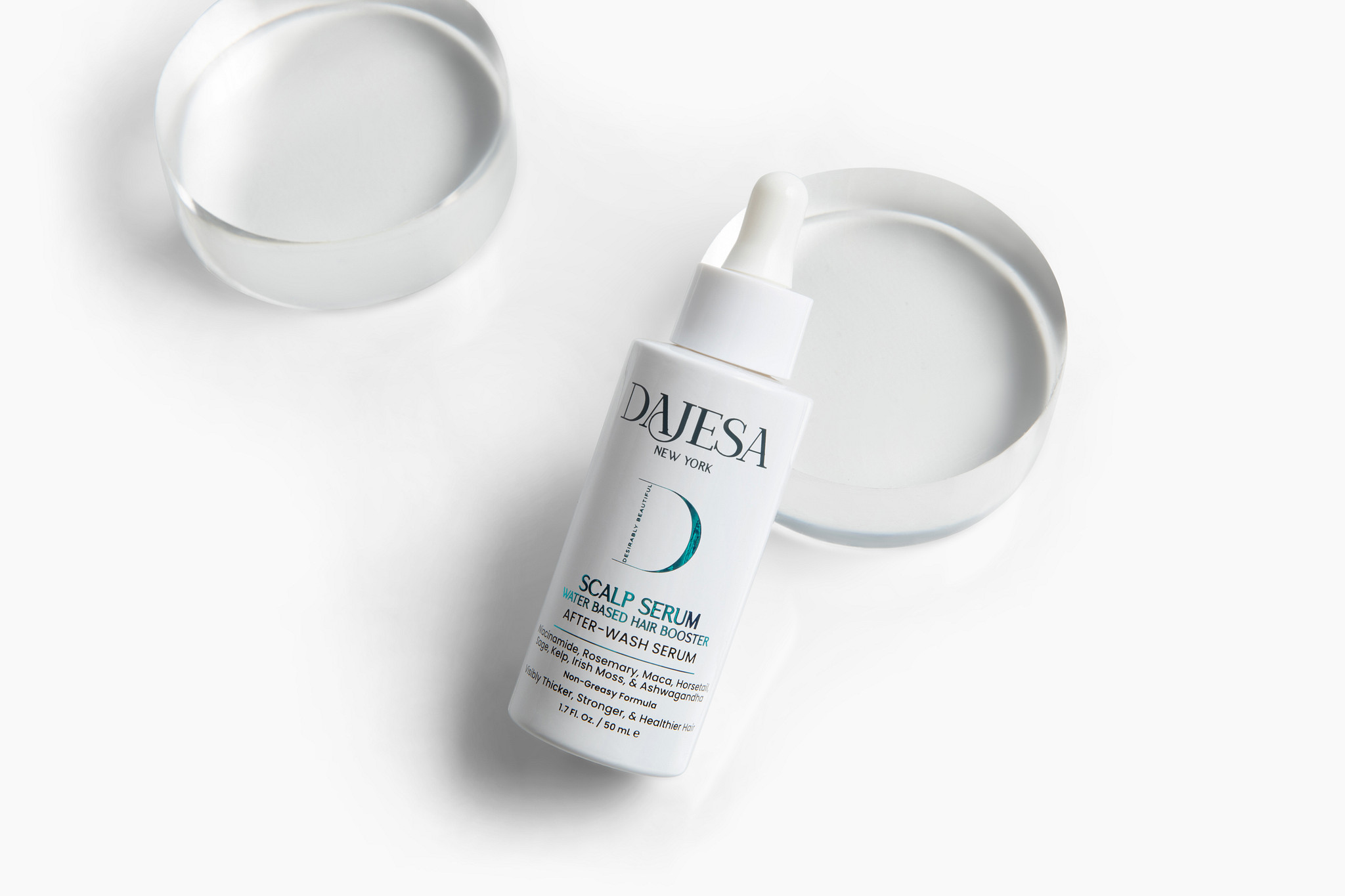
Scalp Serum
A lightweight, leave-on scalp serum powered by 10 botanical adaptogens and clinically-inspired actives that care for the scalp where hair begins.
How to Decide Between Them
- If you have diagnosed or suspected female pattern hair loss — a widening part, thinning at the crown, reduced density over years — minoxidil is the option with the evidence. Talk to a dermatologist.
- If your shedding started after a specific event — a birth, an illness, a crash diet, a new medication, a period of acute stress — that pattern is usually telogen effluvium, it is often self-limiting, and the priority is finding and correcting the trigger. Our postpartum hair loss guide covers the timeline for one common version of this.
- If your scalp is itchy, flaky, greasy by midday, or tight after washing — that is the scalp-care problem, and it is where a niacinamide serum belongs. See our full guide to niacinamide for the scalp.
- If more than one of the above is true — which is common — they are not mutually exclusive.
The Honest Bottom Line
"Niacinamide vs minoxidil" is a comparison the internet made up, because the two are not competing for the same job. Minoxidil is the regrowth option and has the trials to say so. Niacinamide looks after the scalp those follicles sit in and has no business claiming otherwise. Choosing between them is usually the wrong question; working out which problem you actually have is the right one.
Important: This article is informational and is not medical advice. Minoxidil is a drug and should be discussed with a healthcare professional, particularly if you are pregnant, nursing, or taking other medications. Hair loss can have medical, hormonal, nutritional, autoimmune, or medication-related causes. Consult a dermatologist or physician if hair loss is sudden, patchy, severe, or associated with illness. DAJESA products are cosmetic and are not intended to diagnose, treat, cure, or prevent any disease.


