
Nutrafol is everywhere. Your dermatologist may have mentioned it. It shows up in "best hair supplement" lists. And for good reason: it has clinical data behind it, a recognizable brand, and many customers who say it helped support their hair health.
But it is also a premium monthly supplement, often listed around $79-$88 per month depending on the plan and formula, and it is primarily an internal supplement approach. If you are trying to decide whether Nutrafol is worth it, or whether a Nutrafol alternative makes more sense for your routine, the best comparison is not just brand versus brand. It is mechanism versus mechanism.
What Nutrafol Actually Contains
Nutrafol Women's core formula is built around its patented Synergen Complex, with ingredients commonly associated with stress support, inflammation support, hormonal pathways, and nutritional hair health. Public product materials highlight ingredients such as ashwagandha, saw palmetto, marine collagen peptides, curcumin, tocotrienols, and vitamins/minerals depending on the formula.
The formula is thoughtful. For women dealing with stress-related shedding, hormonal changes, or nutritional gaps, those categories make sense. Nutrafol also states that consistent use is typically evaluated over a 3-6 month window, which aligns with the slow pace of the hair growth cycle.
The key comparison point
With any supplement, compare the label against your actual hair concern. A strong brand name matters less than whether the ingredient categories, dosing transparency, safety profile, and timeline match what your body needs.
One reason shoppers compare Nutrafol alternatives is that proprietary blend structures can make it harder to evaluate every individual active amount against the exact doses used in published ingredient studies. That is not automatically a dealbreaker. It simply means you are trusting the finished formula and clinical testing rather than comparing each individual dose yourself.
What an Oral Supplement May Not Address Alone
Oral supplements work from the inside. That can be important when your shedding is connected to stress load, nutritional gaps, postpartum depletion, or hormone-related changes. But the follicle also lives in a scalp environment that can be affected by buildup, irritation, oil imbalance, and barrier stress.
That is where a supplement-only approach may feel incomplete for some women. The scalp is skin. It needs a clean, balanced environment for the hair cycle to function well. Supporting internal nutrition while ignoring the scalp surface is like taking excellent skincare supplements but never washing or treating the face.
If you tried a hair supplement and saw reduced shedding but still feel like density, part-line appearance, or scalp comfort did not improve enough, the missing layer may be topical scalp support rather than a completely different supplement.
What to Actually Look For in a Hair Supplement
Before evaluating Nutrafol, DAJESA, Viviscal, Hers, or any other hair support option, start with the likely reason your hair is changing.
Stress-related shedding
Look for adaptogen support, B vitamins, minerals, and a routine that helps support the stress-to-shedding pathway without promising overnight regrowth.
Postpartum shedding
Focus on nutrient replenishment, gentle scalp care, realistic timelines, and healthcare guidance if pregnant, nursing, or recently postpartum.
Hormonal thinning
Compare DHT-support ingredients, vitamin D, iron status, scalp care, and whether the formula is designed for your life stage.
For many women, the most practical approach is not supplement versus serum. It is internal support plus topical scalp care. Internal nutrition helps support the body systems involved in hair health. A topical serum helps support the scalp environment where the follicle lives.
Nutrafol vs DAJESA: The Honest Comparison
Nutrafol is a strong product. If it is working for you, there is no reason to switch just for the sake of switching. The case for evaluating DAJESA comes down to whether you want a more transparent, mechanism-specific, internal-plus-topical approach.
The full head-to-head belongs on its own page rather than here, and it lives at DAJESA vs Nutrafol, side by side: format, formula transparency, the scalp layer, price per month, subscription terms, and who each one actually suits. This page is about the wider question of what a Nutrafol alternative should contain; that one is about the two products head to head.
DAJESA's Hair Nutraceutical is designed as the internal foundation: ashwagandha for stress support, saw palmetto for DHT-pathway support, biotin, marine collagen peptides, zinc, and vitamin D. The Scalp Serum adds the topical layer with niacinamide, caffeine, and botanical scalp-support ingredients.
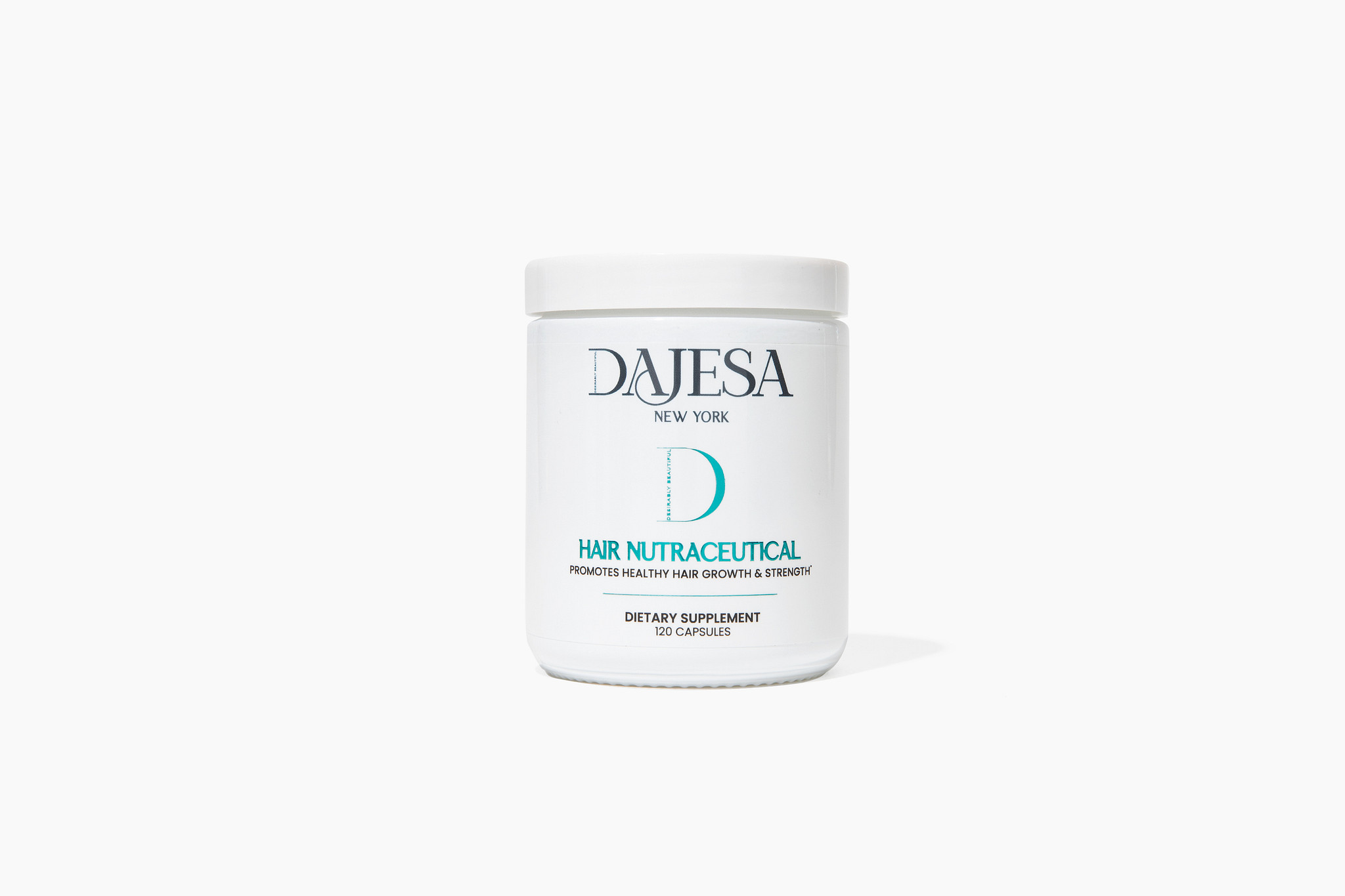
Hair Nutraceutical
A comprehensive daily hair supplement delivering 11 essential vitamins and minerals, 500 mg of collagen peptides, and a 460 mg proprietary blend of...
The point is not that every woman needs to leave Nutrafol. The point is that if you want a Nutrafol alternative, the most useful comparison is whether your routine supports both the inside of the body and the skin environment of the scalp.
Where to Start
If you are building a DAJESA routine as a Nutrafol alternative, start with the internal foundation and add scalp support based on your concern.
If your shedding has a clear trigger, there is a two-step kit for it: the Postpartum Hair Loss Kit, the Menopause Hair Loss kit for women 45 and over, and the GLP-1 Hair Loss Kit for shedding after rapid weight loss.
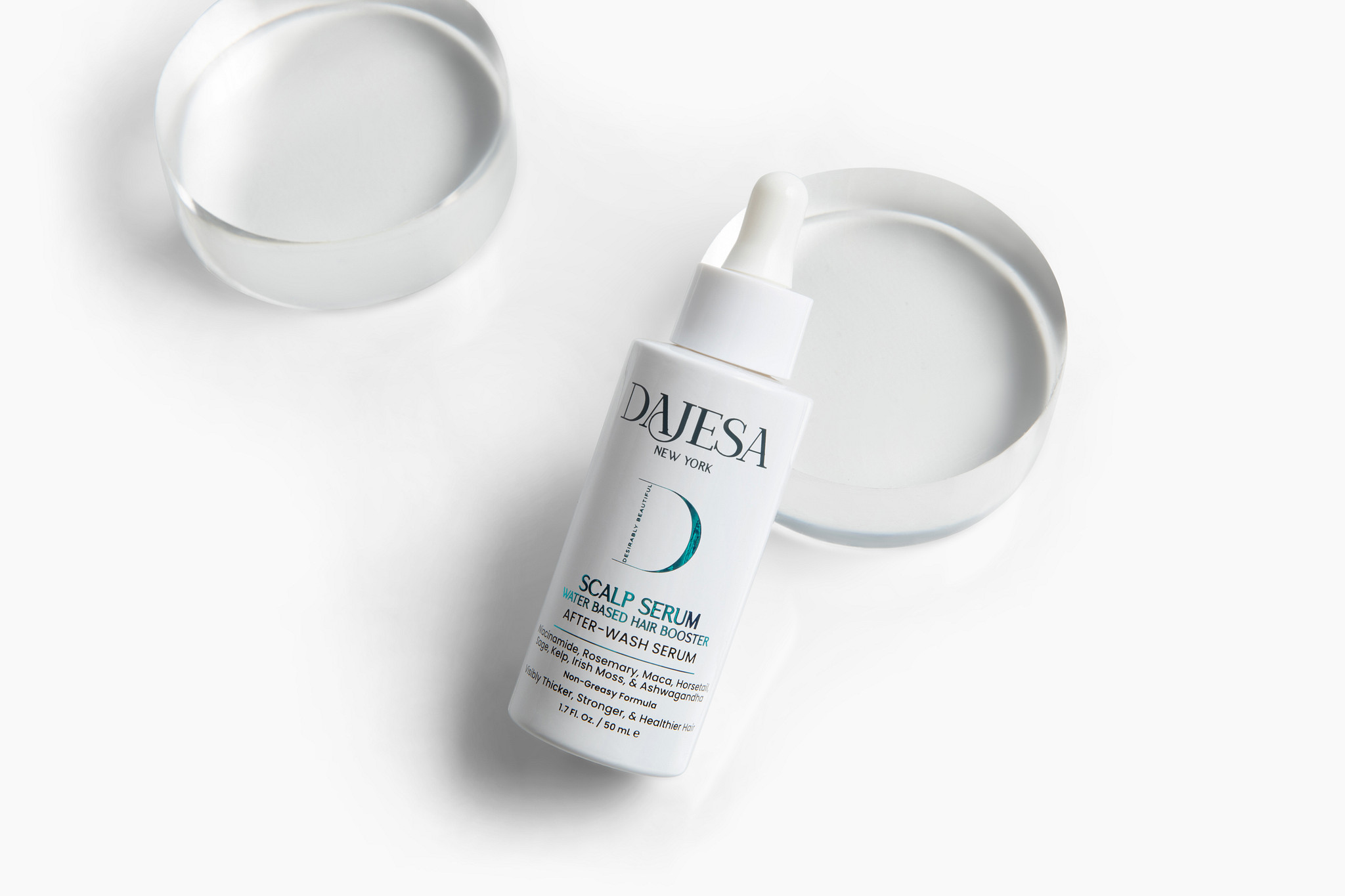
Scalp Serum
A lightweight, leave-on scalp serum powered by 10 botanical adaptogens and clinically-inspired actives that care for the scalp where hair begins.
For women navigating perimenopause, menopause, and age-related hair changes, the Hair Nutraceutical 45+ is the more targeted option.
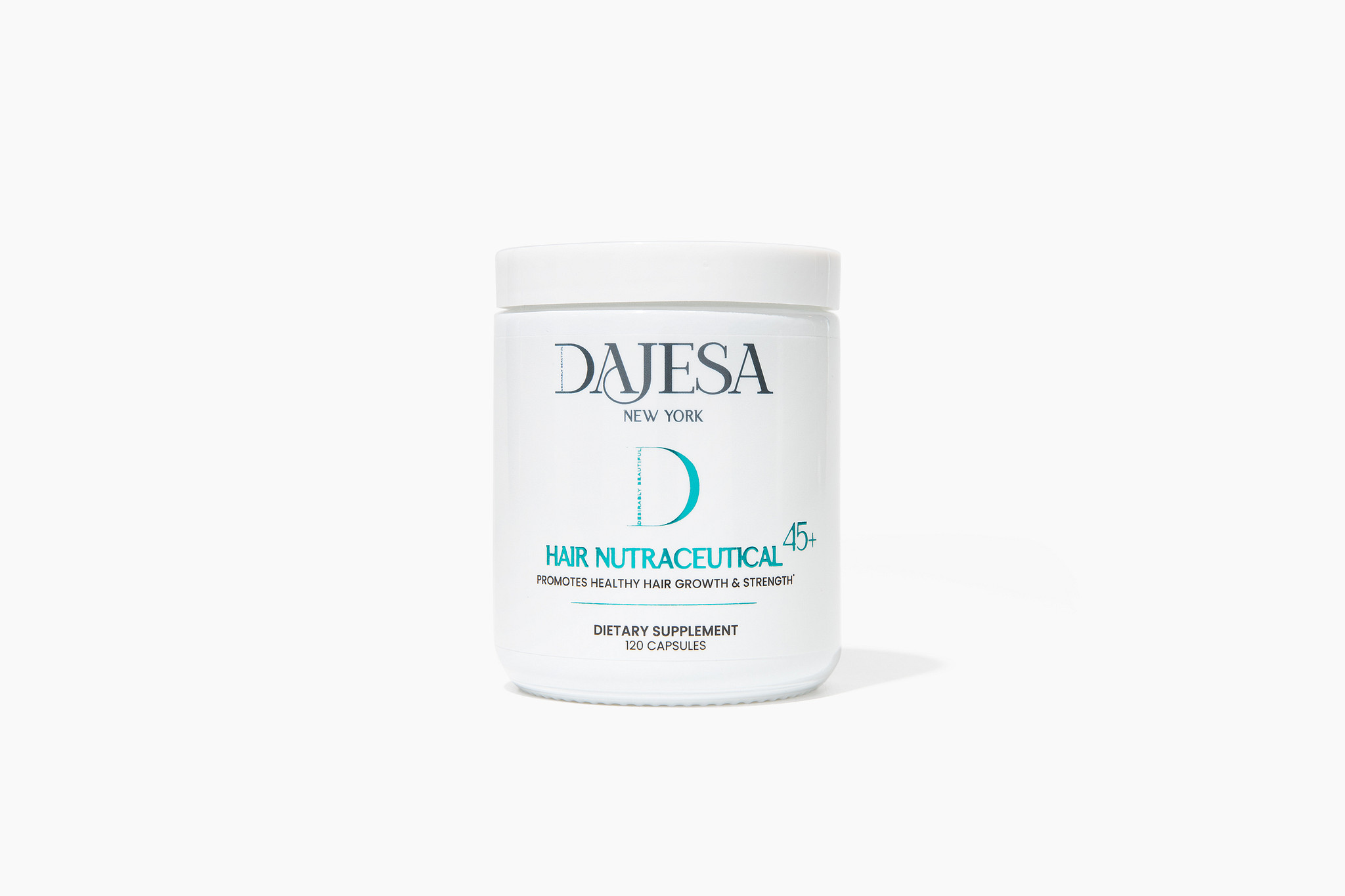
Hair Nutraceutical 45+
An advanced formula specifically developed for women 45+ experiencing hormonal hair loss during perimenopause and menopause. Features Astaxanthin,...
The Bottom Line
Nutrafol can be a good product for the right person. But if you are looking for a Nutrafol alternative, compare more than price. Compare transparency, mechanism, scalp support, safety considerations, and whether the routine fits the way you will actually use it for the next 3-6 months.
For DAJESA, the difference is the system: internal support for the body plus topical support for the scalp. That layered approach is what most supplement-only comparisons leave out.
How Does the Cost Compare Over a Full Cycle?
This is the question behind most searches for a Nutrafol alternative, so here is the arithmetic rather than a slogan. At a listed $79-$88 a month, a full 6-month run — the window Nutrafol's own materials describe for visible results — lands somewhere around $474 to $528 before any subscription discount. That is the number worth comparing against, not the monthly one, because nobody judges a hair supplement in 30 days.
Cheaper alternatives to Nutrafol fall into three honest categories. There are lower-cost multivitamins, which are genuinely cheaper and genuinely weaker, usually because the actives are present at token doses. There are single-ingredient supplements such as saw palmetto or collagen on their own, which cost little and can be the right call if you already know what you are missing. And there are transparent full formulas that publish their doses, where you are paying for the actives rather than for a proprietary blend name.
One caution that applies to all three: a cheaper alternative that you stop after eight weeks costs more than an expensive one you finish. Budget for the whole cycle before you compare monthly prices.
Is There a Generic Version of Nutrafol?
Is there a generic for Nutrafol? No — and the reason is worth understanding, because it is the same reason a Nutrafol dupe cannot exist the way a generic drug does. Generics are a pharmaceutical concept: a patent expires and another manufacturer copies an approved molecule at an approved dose. Nutrafol is a dietary supplement built on a proprietary blend, so there is no single molecule to copy and no regulator certifying that a copy is equivalent.
What people usually mean by a Nutrafol dupe is a formula with overlapping actives at a lower price. That is a reasonable thing to want, and it is findable — but you can only judge it if the label publishes its doses. A product that lists the same ingredient names inside its own proprietary blend tells you nothing about whether the amounts match.
The postpartum case deserves its own note, since a Nutrafol postpartum dupe is the version people search for most specifically. Postpartum shedding is telogen effluvium, it is usually self-limiting, and what it responds to is correcting the depletion behind it — iron and ferritin above all. Before comparing brands there, it is worth getting bloodwork. Our postpartum hair loss guide covers the timeline.
On the ferritin point specifically, the evidence is real but genuinely mixed, and it is worth knowing that before anyone sells you a supplement on the strength of it. Several studies report lower serum ferritin in women with telogen effluvium and female pattern hair loss and suggest screening and correcting a deficiency where one exists (PubMed 23428658). Others, including work by Olsen and colleagues, found no significant increase in iron deficiency versus controls. The practical takeaway is not "take more iron": it is get the blood test, because supplementing iron you do not lack does nothing for your hair and is not harmless.
Products Similar to Nutrafol: How to Compare Them
Whether you are looking at supplements similar to Nutrafol or products like Nutrafol in a broader sense, the same four questions separate a real comparison from a brand argument:
- Is the formula transparent about what it contains and why? Look for named actives, the key amounts (such as collagen and biotin) and a clear rationale for each.
- Does the formula match your cause? Stress-driven, postpartum and hormonal shedding are different problems, and a formula built for one is not automatically better than Nutrafol for another.
- Does it address the scalp at all? Every oral-only option shares the same blind spot, and that includes Nutrafol.
- What does the full course cost? Six months, not one.
Judged that way, nothing is universally better than Nutrafol and nothing is universally worse. What exists is a better or worse fit for a specific cause of shedding, at a price you can sustain long enough to find out.
For a side-by-side view, see DAJESA vs Nutrafol.
What is a good alternative to Nutrafol?
A good Nutrafol alternative should match your likely cause of shedding, be transparent about its key ingredients and why they are there, and fit your budget for at least 3-6 months. DAJESA's Hair Nutraceutical is designed as a transparent internal foundation and can be paired with Scalp Serum for topical scalp support.
Is Nutrafol worth the monthly cost?
It depends on your budget, your hair concern, and whether you want a supplement-first routine. Nutrafol has clinical support and strong brand recognition, but shoppers often compare alternatives because the monthly cost is premium and visible results require consistent use over months.
What are Nutrafol's side effects?
Nutrafol is generally positioned as a drug-free supplement, but any supplement can cause side effects or interactions for some people. Published reviews and medical resources commonly advise speaking with a healthcare professional, especially if you are pregnant, nursing, taking thyroid medication, using blood thinners, or managing a medical condition.
How long does Nutrafol take to work?
Nutrafol's own product materials describe visible results over a 3-6 month consistency window. That is typical for hair supplements because the hair cycle moves slowly. It is usually not realistic to judge any hair supplement in the first 30 days.
Is there a cheaper alternative to Nutrafol?
Yes, but compare the full course rather than the monthly price. At a listed $79-$88 a month, six months of Nutrafol runs roughly $474-$528. Cheaper alternatives fall into three groups: low-cost multivitamins that are weaker because the actives are at token doses, single-ingredient supplements that make sense if you already know what you are missing, and transparent full formulas that publish their doses. A cheaper option you abandon at week eight costs more than an expensive one you finish.
Is there a Nutrafol dupe or generic version?
No. Generics are a pharmaceutical concept — a patent expires and another maker copies an approved molecule at an approved dose. Nutrafol is a dietary supplement built on a proprietary blend, so there is no single molecule to copy and no regulator certifying equivalence. What you can find is a formula with overlapping actives at a lower price, but you can only judge it if the label publishes its doses.
What products are similar to Nutrafol?
Compare on four things rather than brand: whether doses are published, whether the formula matches your actual cause of shedding, whether anything addresses the scalp (every oral-only option shares that blind spot, Nutrafol included), and what six months costs. Nothing is universally better than Nutrafol and nothing is universally worse — there is only a better or worse fit for a specific cause, at a price you can sustain.
Is Nutrafol better than Viviscal?
They use different approaches. Viviscal is known for a marine complex and nutritional support, while Nutrafol is known for a broader root-cause formula that includes adaptogens and botanicals. The better choice depends on your hair concern, budget, ingredient preferences, and whether you also need topical scalp support.
Important: This article is for informational purposes only and is not medical advice. Individual results vary. Always consult a healthcare professional before starting supplements, especially if you are pregnant, nursing, taking thyroid medication, using blood thinners, or managing a medical condition. DAJESA products have not been evaluated by the Food and Drug Administration and are not intended to diagnose, treat, cure, or prevent any disease.