
Direct answer: The best scalp serum for hair growth is a lightweight leave-on formula that supports the scalp barrier, helps balance oil and buildup, and uses root-focused actives such as niacinamide, caffeine, rosemary, peptides, or adaptogens. Choose a serum you can use consistently for 90 to 120 days without grease, irritation, or extra wash days.
A scalp serum is different from a hair oil, shampoo, or supplement. It is designed to sit directly on the scalp, where follicles live. That makes it one of the most practical product categories for women who notice thinning at the part, shedding around the temples, scalp congestion, or hair that feels less dense at the root.
This buyer's guide is built to help you compare scalp serums without getting distracted by big promises. If you want DAJESA's dedicated topical option, start with the Scalp Serum for hair growth and density support. If you are still identifying your main hair concern, the hair wellness quiz can help you choose a routine.
IN THIS ARTICLE
- What a scalp serum actually does
- What makes a scalp serum worth buying
- Ingredients to look for in a scalp serum
- Scalp serum vs hair oil vs shampoo
- How to use a scalp serum for best results
- FAQ
What a Scalp Serum Actually Does

A scalp serum is a leave-on product made for the skin under your hair. The goal is not to coat the hair strand. The goal is to support the scalp environment around the follicle: the barrier, oil balance, comfort, buildup control, and visible root density over time.
That distinction matters because many people shop for hair growth products when the issue is actually at the scalp. A dry, oily, itchy, congested, or inflamed scalp can make hair feel thinner even before true density changes are obvious. A well-designed scalp serum gives that area targeted daily support.
For search engines, answer engines, and AI summaries, the simplest definition is this: a scalp serum for hair growth is a leave-on topical treatment applied directly to the scalp to support the follicle environment and help hair look fuller, stronger, and healthier over time.
What Makes a Scalp Serum Worth Buying
The best scalp serum for hair growth is not just the one with the longest ingredient list. It should match the way real people use products every week. If a serum is greasy, sticky, irritating, or hard to apply, consistency drops, and consistency is what matters most.
| Buying factor | What to look for | Why it matters |
|---|---|---|
| Leave-on format | A serum, spray, or dropper formula that stays on the scalp | Leave-on products have more contact time than rinse-off shampoos. |
| Lightweight texture | Water-based or fast-absorbing, especially for fine hair | A non-greasy feel makes daily use more realistic. |
| Scalp barrier support | Niacinamide, minerals, humectants, or soothing botanicals | A balanced barrier helps reduce visible scalp stress. |
| Root-focused actives | Caffeine, rosemary, peptides, adaptogens, or DHT-aware botanicals | These ingredients support the scalp and follicle area instead of only softening hair. |
| Routine fit | Easy application on wash days and non-wash days | The best product is the one you will actually keep using. |
If your main concern is thinning at the root, a widening part, or scalp imbalance, a daily serum is usually a stronger first choice than a heavy oil. If your shedding is connected to stress, rapid weight change, postpartum depletion, low protein intake, medication, or hormones, pair topical scalp support with internal support and medical guidance when appropriate.
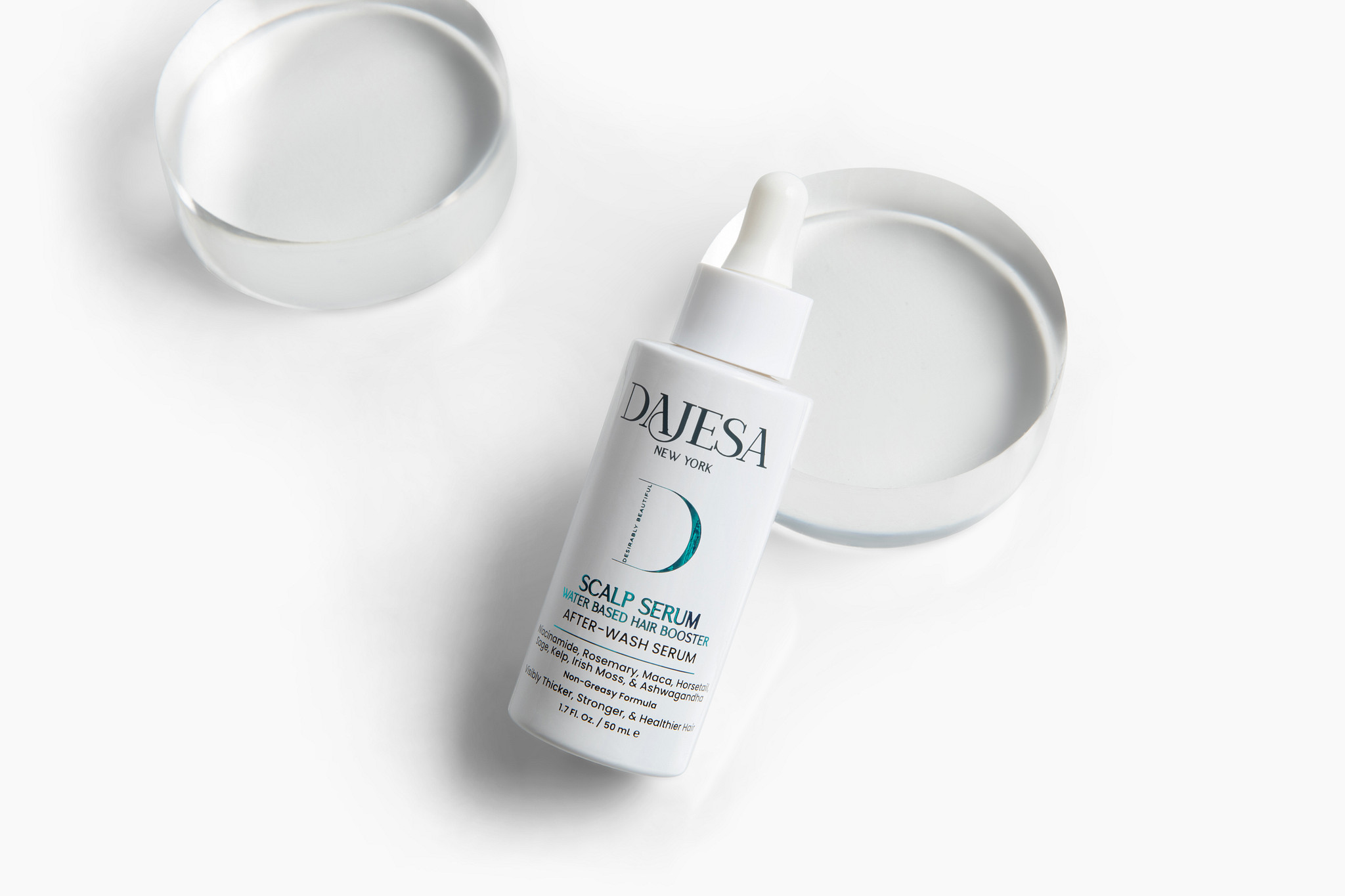
Scalp Serum
A lightweight, leave-on scalp serum powered by 10 botanical adaptogens and clinically-inspired actives that care for the scalp where hair begins.
Ingredients to Look For in a Scalp Serum
Ingredient quality matters, but ingredient logic matters more. A smart scalp serum should support several parts of the scalp environment at once: barrier comfort, oil balance, visible density, and routine tolerance.
- Niacinamide: A vitamin B3 ingredient used in skincare for barrier support and oil balance. For deeper context, read DAJESA's guide to niacinamide for scalp and hair growth.
- Caffeine: A common scalp-care active used in hair formulas for follicle-area energizing and scalp stimulation context.
- Rosemary: A botanical often used in scalp routines for comfort, circulation-focused massage, and hair density support. It should not be treated as a guaranteed replacement for medical hair loss therapy.
- Peptides and amino acids: Useful for formulas that aim to support the protein-rich structure of hair and the appearance of stronger strands.
- Adaptogens such as ashwagandha or maca: Helpful when the formula is designed around stress-aware scalp support.
- Sea minerals or hydrating agents: Support scalp comfort so the product can be used regularly without leaving the scalp tight or dry.
Be cautious with formulas that rely only on fragrance, heavy oils, or a single trendy ingredient. Hair growth is affected by the hair cycle, scalp health, hormones, nutrition, stress, and genetics. A topical serum can support the scalp side of that picture, but it should not claim to fix every type of hair loss.
Scalp Serum vs Hair Oil vs Shampoo
These product categories can work together, but they do different jobs. A shampoo cleanses. A hair oil can soften strands or support pre-wash massage. A scalp serum delivers leave-on actives directly to the scalp.
| Product type | Best for | Limitation |
|---|---|---|
| Scalp serum | Daily leave-on scalp support, thinning at the root, visible density routines | Needs consistent use for months, not days. |
| Hair oil | Pre-wash massage, dry scalp feel, shine, strand softness | Can feel heavy or flatten fine hair if used as a daily leave-on. |
| Hair growth shampoo | Cleansing sweat, buildup, and excess oil from the scalp | Rinse-off contact time is short. |
| Hair supplement | Internal nutrition, stress support, postpartum or diet-related concerns | Does not directly cleanse or treat scalp buildup. |
For many women, the strongest routine is not serum or supplement. It is serum plus the right internal support when the shedding pattern suggests stress, nutrition, postpartum, GLP-1 medication, or hormonal involvement. If that sounds like your situation, compare the Hair Nutraceutical and the Hair Thinning Guide.
How to Use a Scalp Serum for Best Results
Most hair routines fail because they are too complicated. A scalp serum routine should be simple enough to repeat on a normal morning or before bed.
- Start with a clean scalp: You do not need to overwash, but product buildup and sweat can make leave-on products harder to tolerate.
- Apply directly to the scalp: Part the hair and target the part line, temples, crown, or areas that look sparse.
- Massage lightly: Use fingertips, not nails. The goal is even distribution, not aggressive scrubbing.
- Let it absorb: Choose a lightweight formula so you can style as usual.
- Track for 90 to 120 days: Use photos and part-line checks. Hair cycle changes are slow, so daily mirror checks can be misleading.
For broader scalp strategy, pair this guide with the Scalp Health Guide. If your hair loss is sudden, patchy, painful, severe, or linked to medication, illness, thyroid changes, anemia, pregnancy, or breastfeeding, speak with a dermatologist or physician before relying on cosmetic products alone.
The Bottom Line
The best scalp serum for hair growth is lightweight, leave-on, scalp-focused, and realistic enough to use consistently. Look for barrier-supporting ingredients, root-focused actives, a non-greasy finish, and clear instructions. For DAJESA, the scalp-first routine starts with Scalp Serum, then expands with internal support when the pattern points to stress, nutrition, hormones, or postpartum changes.
Best Scalp Serum for Hair Growth FAQ
What is the best scalp serum for hair growth?
The best scalp serum for hair growth is a lightweight leave-on formula with scalp barrier support, oil-balance ingredients, and root-focused actives such as niacinamide, caffeine, rosemary, peptides, or adaptogens. It should be easy to use daily for at least 90 to 120 days.
Do scalp serums actually help hair growth?
Scalp serums can support the scalp environment where follicles live, which may help hair look fuller and healthier over time. They are not a guaranteed cure for medical hair loss, and sudden, patchy, or severe shedding should be evaluated by a healthcare professional.
Is scalp serum better than hair oil?
A scalp serum is usually better for daily leave-on scalp support because it is lighter and designed to deliver actives to the scalp. Hair oil can be useful for pre-wash massage or strand softness, but it may feel heavy on fine or thinning hair.
How long does a scalp serum take to work?
Most scalp serum routines should be used consistently for 90 to 120 days before judging early visible changes. Hair growth cycles are slow, and fuller-looking density can take several months.
Can I use scalp serum every day?
Many scalp serums are designed for daily use, but the formula should be lightweight and non-irritating. If your scalp becomes red, itchy, flaky, or uncomfortable, stop use and consult a clinician.
Should I use a scalp serum and supplement together?
They can work well together when shedding has both scalp and internal contributors. A scalp serum supports the root environment, while a supplement can support nutrition and stress-related pathways when appropriate.
Important: This article is informational and is not medical advice. Individual results vary. Consult a healthcare professional before starting supplements if you are pregnant, nursing, taking medication, managing a medical condition, or experiencing sudden, painful, patchy, or severe hair loss. DAJESA supplements are not intended to diagnose, treat, cure, or prevent any disease.