
Hair health evolves at every life stage, and understanding these shifts is essential for maintaining volume. From the estrogen peaks of early adulthood to the androgen shifts of perimenopause, a targeted approach is the first step toward long-term density.
The 30s: The first subtle shift
In the 30s, many women notice the first changes in hair texture. This decade is often defined by postpartum shifts and the cumulative effects of career or lifestyle stress. Estrogen levels, which normally keep hair in a prolonged growth phase, can fluctuate, leading to a noticeable loss of former volume.
The 40s: Navigating Perimenopause
As women enter their 40s, progesterone and estrogen begin a gradual decline. This allows androgens (male-pattern hormones) to become more dominant. Even when levels aren't "high," the lack of estrogen makes follicles more sensitive to DHT. This can lead to miniaturization, where hair grows back thinner and shorter each time. This is a critical moment to begin a recovery protocol.
Indicators in the 40s:
- A wider part line.
- Hair that feels "finer" without significant shedding.
- Reduced sebum production and a drier scalp.
The 50s and Beyond: Supporting Mature Hair Density
During and after menopause, the protective shield provided by estrogen is largely reduced. At this stage, the focus shifts to supporting the scalp’s moisture barrier and fortifying the hair shaft with structural proteins like Collagen and Keratin.
The Hair Nutraceutical 45+ is specifically formulated for this third stage, incorporating Maca Root for hormonal balance and Astaxanthin to combat the oxidative stress that accelerates with age.
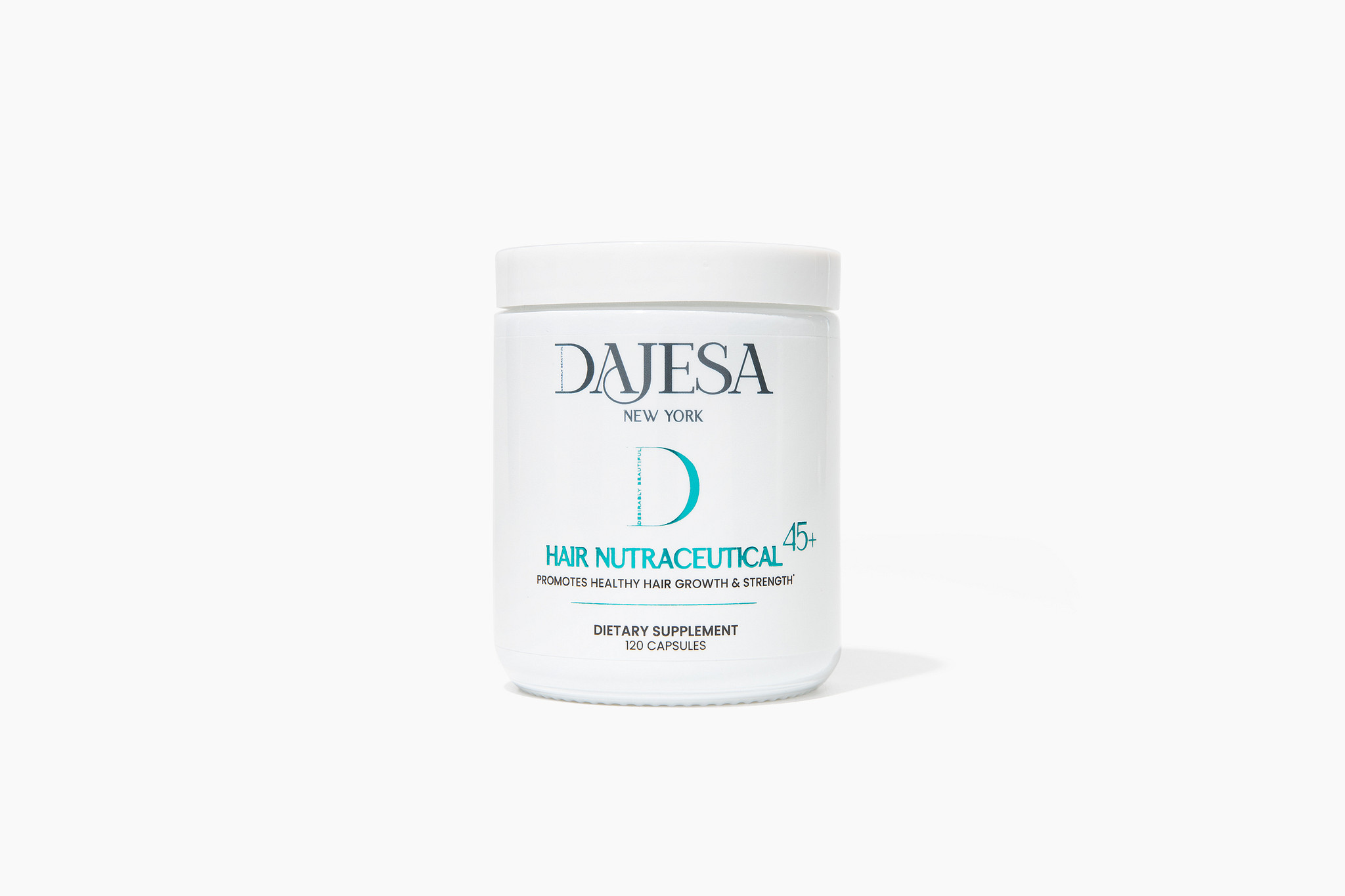
Hair Nutraceutical 45+
An advanced formula specifically developed for women 45+ experiencing hormonal hair loss during perimenopause and menopause. Features Astaxanthin,...
Decade-by-Decade Guide
| Decade | Primary Driver | Hair Goal |
|---|---|---|
| 30s | Postpartum shifts & Accelerated Cortisol | Growth Reactivation & Deep Nourishment |
| 40s | Estrogen Decline & DHT Sensitivity | Miniaturization Defense & DHT Blocking |
| 50s+ | Post-Menopause & Structural Weakness | Follicle Fortification & Moisture Retention |
Hormonal Hair Loss FAQ
When should I start taking preventative action?
It is generally recommended to begin a targeted density protocol in your late 30s or early 40s, before miniaturization becomes visually apparent along the part line.
Does estrogen decline affect my eyebrows and lashes too?
Yes. As estrogen decreases, you may notice that eyebrow tails and lashes become sparser. Supporting your body with structural proteins like Collagen and Keratin can promote healthier growth across all facial hair.
Can I reverse thinning caused by perimenopause?
While you cannot stop the aging process, you can dramatically improve hair density by actively blocking DHT, providing the body with adaptogens, and deep-nourishing the existing follicles.