
For decades, Minoxidil has been the gold standard in topical hair loss treatment. However, it comes with a frustrating caveat for many women: systemic absorption that causes cardiovascular palpitations, facial hair growth, and a terrifying initial "dread shed."
Fortunately, modern dermatological science has identified a powerful, non-pharmaceutical alternative that works on a completely different biological pathway: Topical Melatonin.
How Minoxidil Works (and Why It Fails Some)
Minoxidil is a vasodilator. It artificially forces blood vessels open to flood the follicle with oxygen. While effective, it creates dependency. If you stop using Minoxidil, the vessels constrict rapidly, and all the hair gained quickly falls out.
The Science of Topical Melatonin
You likely know melatonin as the hormone that regulates sleep. However, your hair follicles actually have melatonin receptors, and they are capable of synthesizing melatonin locally.
When applied directly to the scalp, clinical studies show topical melatonin acts as a powerful orchestrator of the hair cycle. It actively signals the follicle to stay in the Anagen (growth) phase far longer than its normal lifespan. It also acts as an elite antioxidant, neutralizing free radicals that age the follicle prematurely.
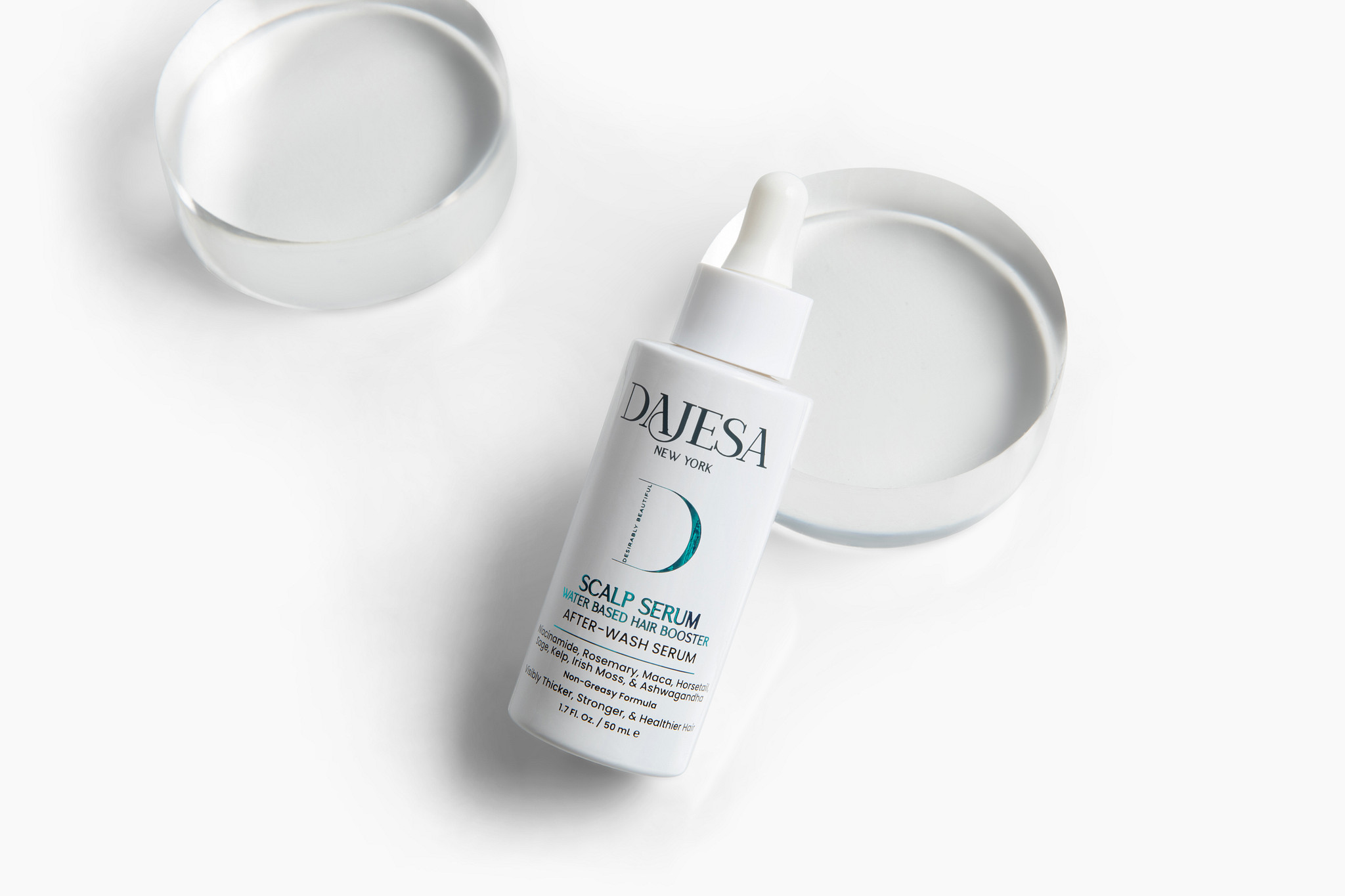
Scalp Serum
A lightweight, leave-on scalp serum powered by 10 botanical adaptogens and clinically-inspired actives that care for the scalp where hair begins.
The clear winner for long-term health
Unlike Minoxidil, topical melatonin does not cause a "dread shed," and it does not make your hair dependent on an artificial blood-pressure drug. DAJESA incorporated a clinical concentration of melatonin into our Scalp Serum to provide powerful density support that is safe for long-term, daily use without systemic cardiovascular side effects.
Melatonin vs Minoxidil FAQ
Will putting melatonin on my scalp make me sleepy?
No. When formulated in a targeted topical scalp serum, melatonin does not enter the systemic bloodstream in high enough concentrations to cross the blood-brain barrier and cause drowsiness. It acts locally on the follicle receptors.
Can I switch from Minoxidil to Melatonin?
If you are currently using Minoxidil, do not stop abruptly, as this will trigger severe shedding. Consult with your dermatologist about a safe tapering plan while integrating a melatonin-based scalp serum to support new growth.
How exactly does it stop shedding?
Telogen Effluvium (excess shedding) happens when follicles prematurely enter the resting phase. Melatonin binds to specific cellular receptors that delay this transition, actively holding the hair in the anagen (growth) phase for months longer.