
Yes, cortisol directly causes hair loss. When chronic stress elevates cortisol levels, the hormone disrupts the hair follicle growth cycle by pushing follicles prematurely into the resting phase — a condition called telogen effluvium. The shedding typically begins 6 to 12 weeks after the stressor, and with the right intervention, it is reversible.
You noticed it in the shower drain first. Then in your brush. Then in the way your part looked wider than it used to.
You hadn't changed your diet. You weren't on new medication. But the past few months had been — a lot. Work, a move, a relationship, a health scare, a year of barely sleeping. Or all of the above.
Here's what most people don't know: stress doesn't just affect your mood, your sleep, or your digestion. It communicates directly with your hair follicles — and when the message it sends is "emergency, shut everything non-essential down," your hair is one of the first things to go.
This is the mechanism, the timeline, and what you can actually do about it. For a complementary breakdown of the cortisol signal pathway, see our companion guide on how cortisol triggers sudden hair shedding.
How Cortisol Attacks Your Hair Follicles
The hypothalamic-pituitary-adrenal (HPA) axis is your body's stress response system. When you perceive a threat — physical, emotional, or chronic — your adrenal glands release cortisol. This is useful in acute situations. In chronic stress, it becomes destructive.
Here's what elevated cortisol does to your hair specifically:
It pushes follicles out of the growth phase.
Hair follicles cycle through three phases: anagen (growth, 2-6 years), catagen (transition, 2-3 weeks), and telogen (rest/shedding, 3 months). Cortisol disrupts the signaling that keeps follicles in anagen. Under chronic stress, more follicles than usual enter telogen simultaneously — causing a wave of shedding 6-12 weeks later, when those follicles complete their rest phase and release the hair.
It constricts blood flow to the scalp.
Cortisol activates vasoconstriction — blood vessels narrow. The dermal papilla, which feeds the hair follicle, gets less oxygen and fewer nutrients. Follicles that are already borderline get pushed below the threshold for growth.
It increases DHT sensitivity.
Chronic stress elevates androgens alongside cortisol. In women with existing sensitivity to DHT (the androgen most associated with follicle miniaturization), stress accelerates the miniaturization process — producing thinner, shorter strands with each cycle.
It depletes the cofactors hair needs.
Cortisol metabolism consumes zinc, magnesium, and B vitamins — all critical for follicle cell division. A chronically stressed person is often depleted in the exact micronutrients that keep hair growing.
The result: more shedding, thinner regrowth, and a scalp environment that doesn't support recovery.
What Stress Hair Loss Actually Looks Like
Stress-related hair loss has a distinct pattern that separates it from androgenetic (genetic) hair loss or postpartum shedding:
- Diffuse loss across the whole scalp. Unlike genetic hair loss, which follows a pattern (crown, temples), cortisol-related loss affects the entire scalp. You notice general thinning rather than a specific zone.
- Comes in a wave, 6-12 weeks after the stressor. The delay is the most confusing part. Women often can't connect the shedding to the cause because the crisis happened months ago. If you're shedding now and experienced a significant stressor in late winter — that's the connection.
- Visible in the brush and shower, not necessarily in the mirror — at first. Early-stage telogen effluvium shows in the volume of hair coming out each day (more than the normal 50-100 strands) before you see visible thinning. Later-stage shows in the part width and overall volume.
- Hair texture changes before density does. New growth coming in finer and weaker than before is often the first sign the follicles are under stress, before significant density loss is visible.
Telogen Effluvium: The Clinical Name for What You're Experiencing
Telogen effluvium (TE) is the medical term for diffuse hair shedding caused by a systemic disruption — stress, illness, nutritional deficiency, hormonal change, or surgery.
In a healthy scalp, roughly 10-15% of follicles are in telogen at any given time. In TE triggered by cortisol, that percentage can jump to 30-50% simultaneously. When those follicles complete their rest phase and shed, the volume of daily loss is noticeably higher — and the scalp visibly thinner.
There are two patterns:
- Acute TE — triggered by a single identifiable event (a medical procedure, a sudden loss, a period of extreme work pressure). Usually resolves within 3-6 months once the trigger is removed.
- Chronic TE — triggered by ongoing stress with no clear resolution point. More common in high-performing women in their 30s and 40s who operate at a sustained high baseline of cortisol. Requires both reducing the trigger and actively supporting follicle recovery.
The distinction matters because the treatment protocol is different: acute TE responds primarily to time and basic nutritional support. Chronic TE requires a more targeted intervention — specifically addressing the DHT sensitivity and micronutrient depletion that chronic cortisol creates.
Is Stress Hair Loss Reversible?
Yes — with an important qualifier: the follicle has to still be functional.
In cortisol-related hair loss, follicles enter a premature rest phase but are not destroyed. Once the stressor is managed and the follicle environment is supported, most follicles resume normal cycling. The regrowth timeline:
- 0-60 days: Reduced shedding is the first sign of improvement. New vellus hairs (short, fine) appear at the hairline.
- 3-6 months: Noticeable regrowth. Hair that fell out in the acute phase is now in its anagen phase again.
- 6-12 months: Density approaching baseline. Texture normalizes.
The catch: if chronic stress continues without intervention, follicles can progressively miniaturize — moving from reversible TE toward a pattern that's harder to reverse. The window for easier recovery is the first 6-12 months of shedding.
The 5 Ingredients with Clinical Evidence for Cortisol-Related Hair Loss
Not every supplement marketed for hair loss addresses the cortisol pathway. These five do.
Ashwagandha (KSM-66)
A standardized root extract with the most robust clinical data on cortisol reduction. A 2012 double-blind RCT (Chandrasekhar et al.) showed KSM-66 reduced serum cortisol by 27.9% versus placebo over 60 days. Reduced cortisol = less follicle disruption at the source. Dose: 300-600mg daily.
Saw Palmetto
Addresses the DHT component of stress-related loss. As cortisol elevates androgen sensitivity, saw palmetto inhibits 5-alpha reductase — the enzyme that converts testosterone to DHT. Published data shows measurable reduction in DHT-related follicle miniaturization at 320mg/day oral. Most effective in combination with topical application.
Biotin at clinical dose
The cofactor most depleted by cortisol metabolism. The distinction: cosmetic supplements use 30-100mcg, which has no documented effect. Clinical trials use 2,500-5,000mcg. Below that threshold, supplementation does not meaningfully impact hair.
Marine Collagen Peptides
The structural matrix surrounding hair follicles is collagen-rich. Chronic stress degrades this matrix through elevated inflammatory markers. Marine collagen (types I and III, at 2.5g+ daily) provides the building blocks for follicular structural recovery — particularly relevant in chronic TE where the matrix has been compromised over months.
Zinc
Cortisol directly upregulates zinc excretion — stressed individuals lose zinc faster than they replenish it through diet. Zinc is a required cofactor for follicle cell division. Deficiency is one of the most common and correctable causes of diffuse hair loss. Target: 25-40mg daily with food (higher doses on empty stomach cause nausea).
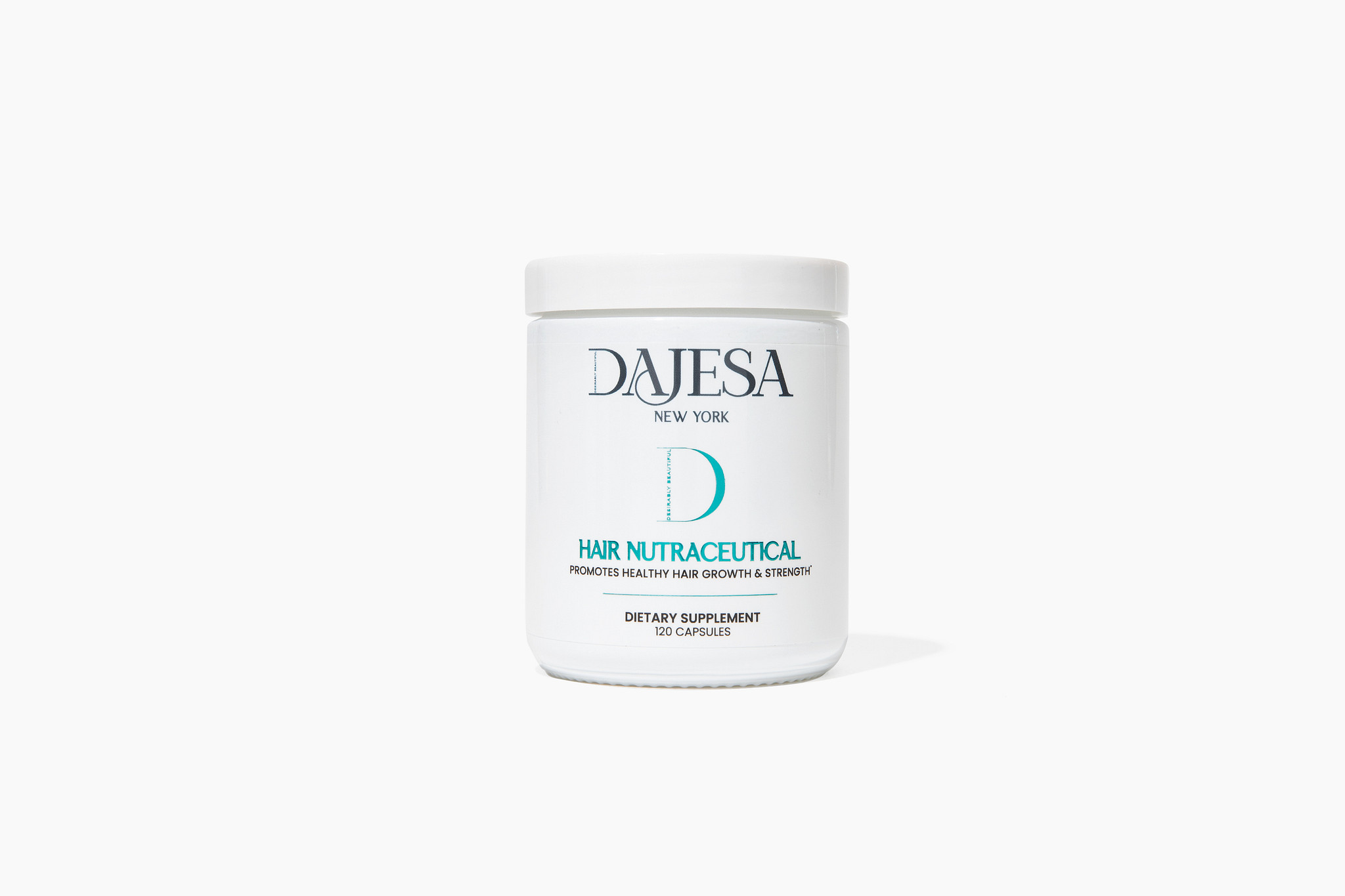
Hair Nutraceutical
A comprehensive daily hair supplement delivering 11 essential vitamins and minerals, 500 mg of collagen peptides, and a 460 mg proprietary blend of...
The Complete Protocol — Internal and Topical
The cortisol-hair connection has to be addressed on both fronts. Topical treatments alone don't reach the systemic disruption. Internal supplements alone don't address the scalp environment. Both, in sequence, build the conditions for recovery.
Morning — systemic support
The Hair Nutraceutical addresses the internal layer: ashwagandha, saw palmetto, biotin at clinical dose, marine collagen, and zinc in a single daily supplement. Take with food for absorption. Consistency over 90+ days is what produces results — not a 30-day trial.
Pre-wash — scalp circulation
Apply the Pre-Wash Scalp Oil to dry hair before shampooing. Massage in sections for 3-5 minutes. This serves two functions: it increases microcirculation to the follicle (partially counteracting the vasoconstriction cortisol induces) and creates a protective layer before the shampoo process. Minimum 15 minutes before washing, or overnight.
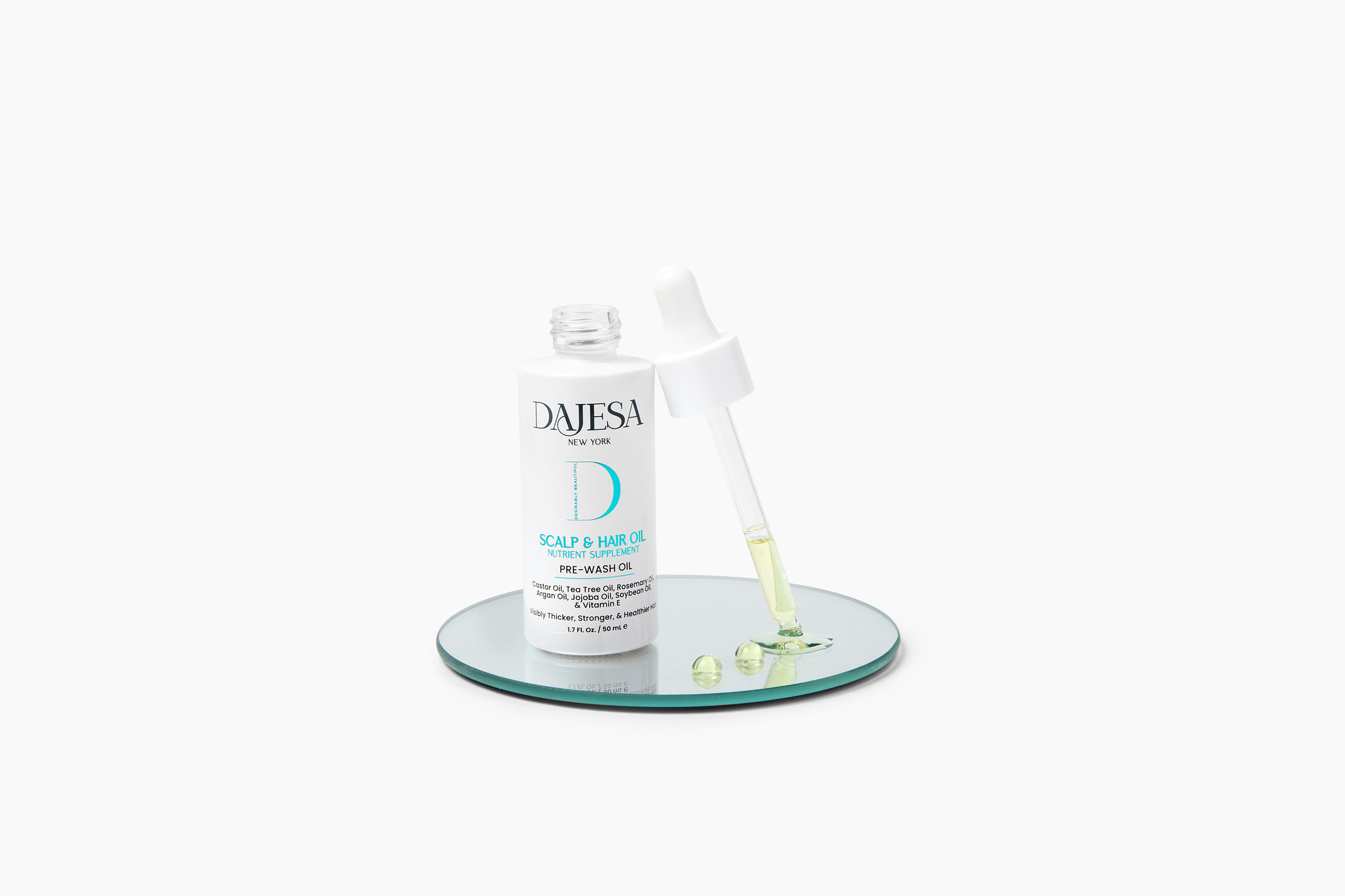
Pre-Wash Scalp Oil
A luxurious pre-wash scalp treatment that combines seven pure, cold-pressed oils to deeply nourish, stimulate, and detoxify the scalp. Designed to...
Wash — DHT-targeted cleanse
The Growth & Strength Shampoo is formulated for scalp health. The 60-second scalp massage during shampooing isn't optional — it activates the active ingredients and promotes the drainage of DHT-linked sebum buildup that accumulates under stress.
Post-wash — active treatment
Apply the Scalp Serum while the scalp is still damp. The niacinamide in the formula directly addresses the sebum dysregulation and inflammation that cortisol creates at the follicle level. Don't substitute this step.
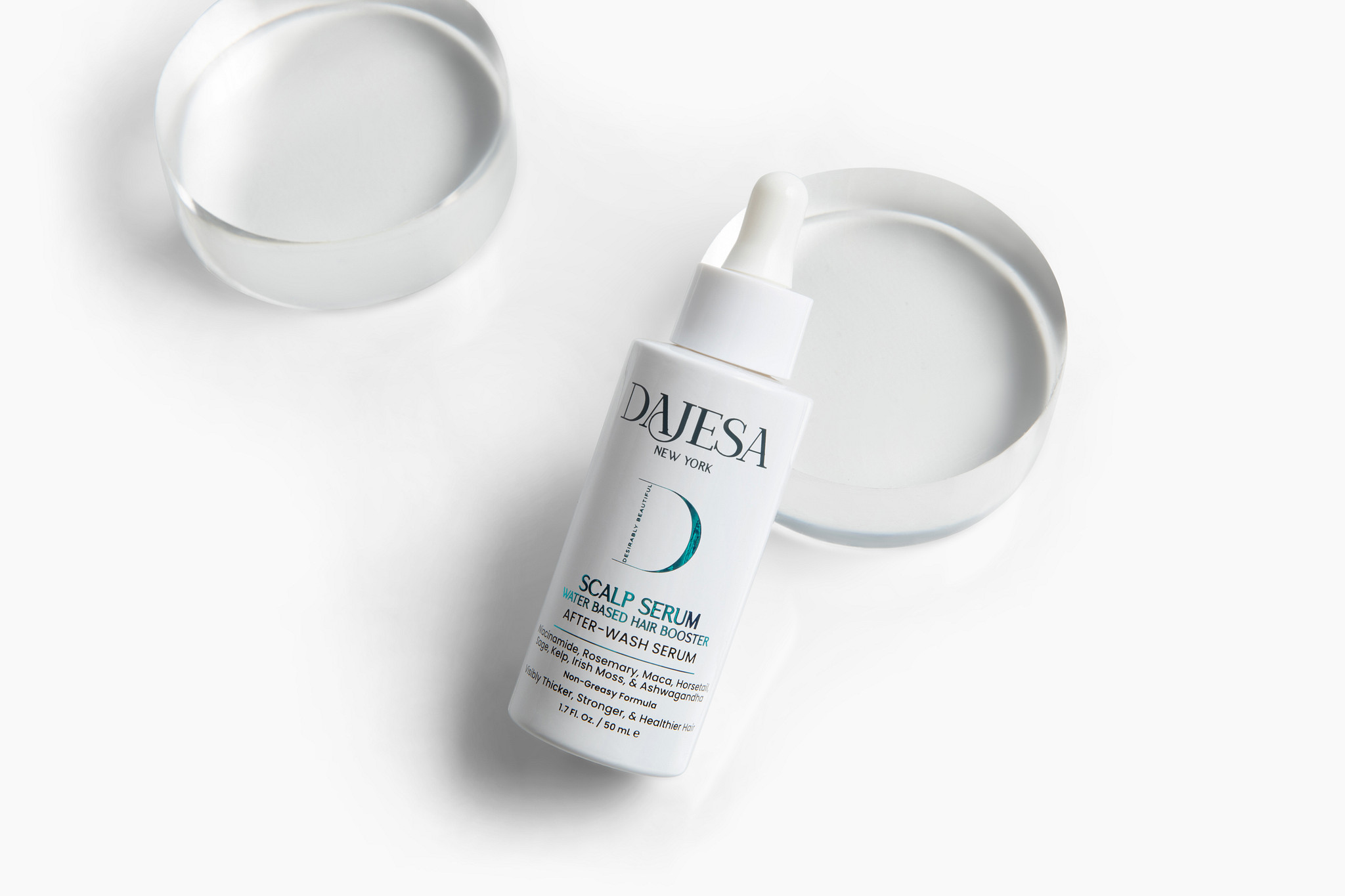
Scalp Serum
A potent, leave-on growth-activating serum powered by 10 botanical adaptogens and clinically-studied actives that target the root causes of hair loss...
One thing to reduce that costs nothing
The cortisol-hair cycle has a behavioral lever that no supplement replaces: sleep. Cortisol regulation is directly tied to sleep architecture. Melatonin naturally suppresses cortisol in the late evening — disrupted sleep means elevated cortisol from the first waking hour. If sleep is the stressor, the protocol above will work slower than it should.
How Long Until You See Results
The most honest answer: longer than you want, shorter than you fear.
- 30-45 days: Shedding rate begins to decrease. The most immediate sign is a reduction in what you find in the drain and brush — not necessarily new growth yet, but less loss.
- 60-90 days: Vellus hair (fine, short new growth) appears at the hairline and part. Texture of existing hair improves.
- 4-6 months: Visible density improvement at the crown and part. New strands are closer to your normal diameter.
- 9-12 months: Return to baseline density for most women with acute-to-moderate TE. Chronic TE may take longer depending on how long the stress was sustained.
The protocol only works through accumulation. A 30-day trial is not a fair test of anything that operates on hair growth cycles.
Stress Hair Loss FAQ
Can cortisol really cause hair loss?
Yes. Elevated cortisol pushes hair follicles prematurely into the telogen (resting) phase, reduces blood flow to the scalp, and depletes the micronutrients follicles need to grow. The shedding typically appears 6-12 weeks after the stressor peaks.
Is stress hair loss permanent?
In most cases, no — provided the follicles haven't been progressively miniaturized by prolonged DHT exposure alongside chronic stress. Follicles that entered premature rest due to cortisol can resume normal cycling once the trigger is managed and the follicle environment is supported.
How long does stress-related hair loss last?
Acute telogen effluvium triggered by a single stressor typically resolves in 3-6 months. Chronic stress-related loss requires longer — most women see significant improvement at 6-9 months with a consistent protocol. Shedding reduction is usually the first sign at 30-45 days.
How do I stop cortisol from affecting my hair?
Two fronts simultaneously: reduce cortisol at the source (ashwagandha KSM-66 has the strongest clinical data) and support the scalp environment topically while the systemic cortisol normalizes. Pre-wash scalp massage increases follicle circulation; a scalp serum with niacinamide addresses DHT-linked inflammation.
What vitamins help with stress hair loss?
The five with the strongest clinical data for the cortisol pathway: ashwagandha (cortisol reduction), saw palmetto (DHT inhibition), biotin at 2,500-5,000mcg (not cosmetic doses), marine collagen peptides (follicle structure), and zinc (the cofactor most depleted by cortisol metabolism).
If what you've read here matches what you're experiencing, the Hair Nutraceutical was built for this. It addresses the cortisol, the DHT, and the depletion simultaneously — in a single daily supplement formulated for women dealing with the compounded stress pattern most hair products ignore.
For the complete scalp protocol — from pre-wash to post-wash — the Growth & Strength system works alongside the supplement to address what's happening on the surface while the nutraceutical works from the inside.
Individual results vary. This article cites peer-reviewed research; links and study references available on request.