
Direct answer: Rosemary oil and minoxidil can both support hair count, but they work through different mechanisms. A 2015 randomized trial published in SKINmed found rosemary oil performed similarly to 2% minoxidil after 6 months in people with androgenetic alopecia, with less scalp itching reported in the rosemary oil group. The important nuance: this was one study, it compared against 2% minoxidil rather than 5%, and it does not mean rosemary oil is a universal replacement for medical hair loss treatment.
The comparison keeps growing because women want options that fit their scalp, lifestyle, and tolerance level. Minoxidil has a much larger clinical history and remains a standard over-the-counter hair regrowth treatment. Rosemary oil has more limited evidence, but it is interesting because it may support scalp circulation, inflammation balance, and the DHT pathway.
How Minoxidil Works
Minoxidil was originally developed as a blood pressure medication. Its hair-growth effect led to topical formulas used for androgenetic alopecia. Topical minoxidil is understood to support follicles partly through vasodilation and by helping prolong the active growth phase.
It can work, but the commitment matters. Official minoxidil labeling states that continuous use is needed to maintain regrowth, and newly regrown hair is usually lost within a few months after stopping. Some users also experience temporary shedding when starting, plus scalp itching or irritation, especially with alcohol-based solutions.
How Rosemary Oil Works Differently
Rosemary oil, from Rosmarinus officinalis, is usually discussed for hair because of three possible pathways:
- Microcirculation support: Rosemary oil may help support blood flow at the scalp, although it should not be treated as equivalent to a drug mechanism.
- DHT-pathway support: Preclinical evidence suggests rosemary compounds may interact with 5-alpha reductase activity, the enzyme involved in converting testosterone to DHT.
- Scalp comfort and inflammation balance: Rosemary contains antioxidant and anti-inflammatory compounds that may help create a healthier scalp environment.
The takeaway is not that rosemary oil is stronger than minoxidil. It is that rosemary oil may be useful as part of a broader scalp-health protocol, especially for shoppers who want a botanical-first routine or who do not tolerate minoxidil well.
The 2015 Study
The landmark comparison was published in SKINmed by Panahi et al. It was a randomized trial with 100 participants with androgenetic alopecia. One group used 2% minoxidil, and the other used rosemary oil for 6 months.
At 3 months, neither group showed a major difference. At 6 months, both groups showed significant improvement from baseline, and the difference between groups was not statistically significant. Scalp itching was reported more often in the minoxidil group.
Evidence note: This was a single 6-month study comparing rosemary oil to 2% minoxidil. It does not prove rosemary oil equals 5% minoxidil, and it does not cover every type of hair loss. It does support rosemary oil as a reasonable ingredient to consider in a scalp-care routine.
Who Should Consider Minoxidil?
Minoxidil may be the better fit if you have diagnosed androgenetic alopecia, want an FDA-recognized OTC hair regrowth active, and are comfortable with long-term use. It is also worth discussing with a dermatologist if you have progressive pattern thinning, sudden shedding, patchy hair loss, or a medical condition that could be driving the change.
Who Should Consider Rosemary Oil?
Rosemary oil may be a better fit if you want a botanical scalp-support routine, have mild or early thinning, are focused on scalp comfort, or have not tolerated minoxidil well. It should be properly diluted or used in a professionally formulated product; undiluted essential oil can irritate the scalp.
The Combined Approach
Some routines combine minoxidil with botanical scalp support. That can make sense when the goal is to support multiple pathways: minoxidil for growth-phase support, rosemary oil for scalp comfort and botanical DHT-pathway support, and barrier-support ingredients to reduce irritation risk.
For women who are not ready for minoxidil, a rosemary-based scalp routine can be a practical first step, provided expectations are realistic. Hair changes are slow. A 3-6 month evaluation window is more realistic than judging results after a few weeks.
What This Means for Your Scalp Protocol
If you are comparing rosemary oil vs minoxidil, start by asking what may be driving your hair change. Stress shedding, postpartum shifts, nutritional depletion, scalp irritation, and androgenetic alopecia are different problems. A product can only help if its mechanism matches the problem.
The DAJESA Scalp Serum uses rosemary alongside niacinamide, caffeine, and botanical scalp-support ingredients in a water-based daily formula. It is designed for the scalp environment: comfort, barrier support, and follicle-area care.
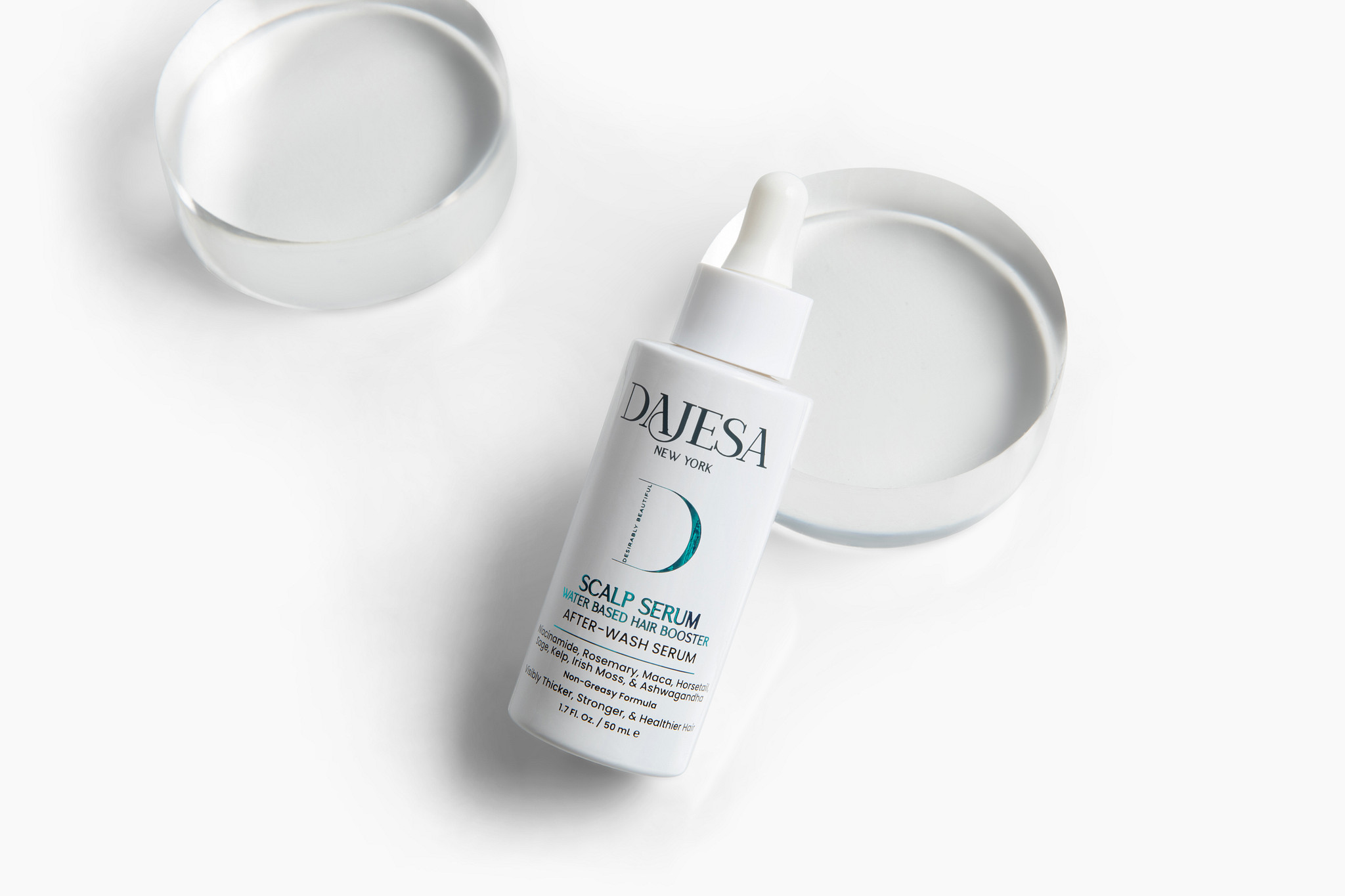
Scalp Serum
A lightweight, leave-on scalp serum powered by 10 botanical adaptogens and clinically-inspired actives that care for the scalp where hair begins.
For a deeper pre-wash step, the Pre-Wash Scalp Oil applies rosemary oil directly to the scalp before cleansing, giving the ingredient contact time while supporting massage-based scalp care.
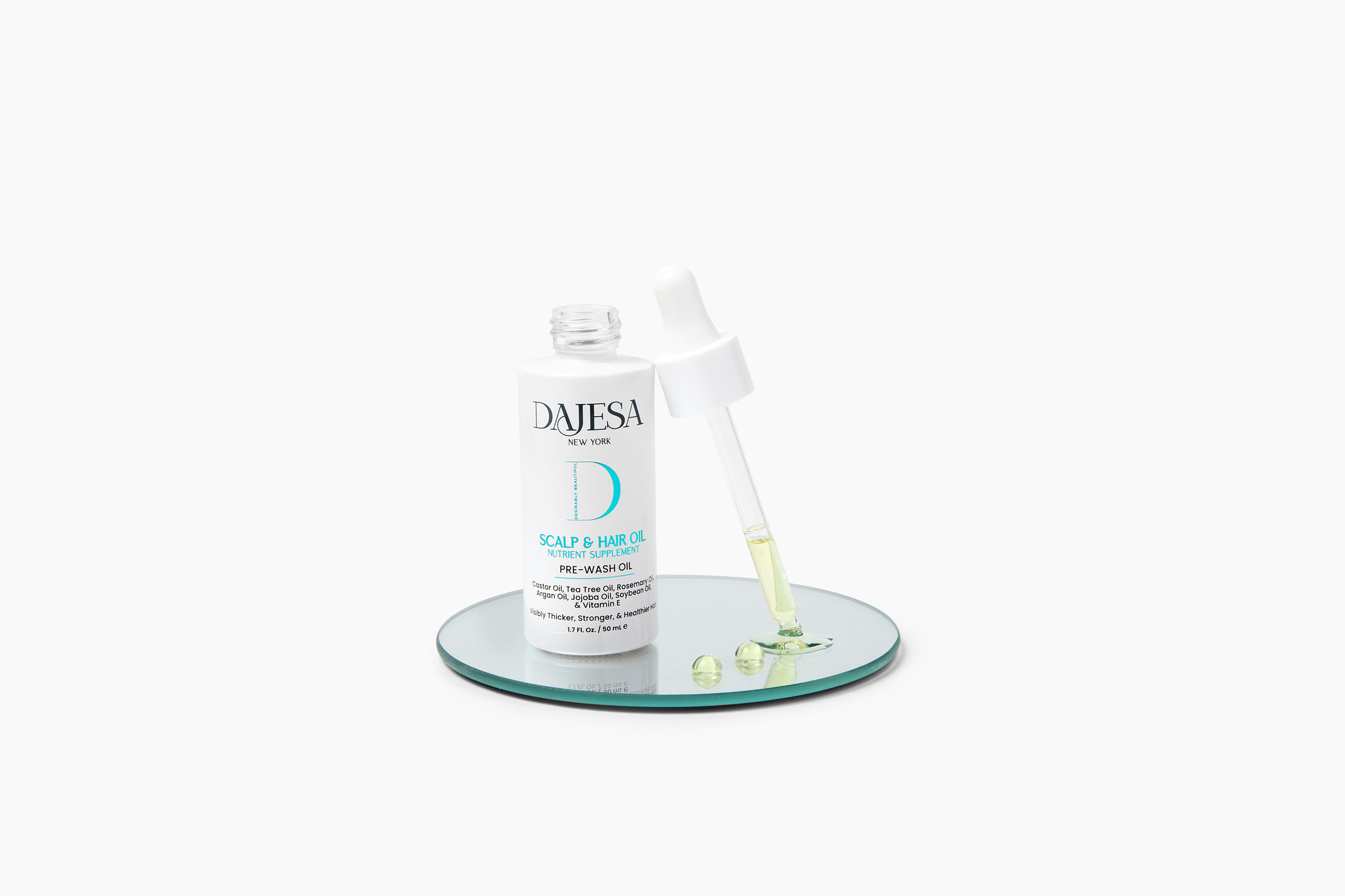
Pre-Wash Scalp Oil
A luxurious pre-wash scalp treatment that combines seven pure, cold-pressed oils to deeply nourish, stimulate, and detoxify the scalp. Designed to...
The Bottom Line
Minoxidil has the broader clinical history and may be appropriate for diagnosed pattern hair loss. Rosemary oil has more limited but interesting evidence, including a 2015 comparison with 2% minoxidil, and may be a strong fit for a botanical scalp-health routine.
The strongest SEO-friendly answer is also the most honest one: rosemary oil is not a guaranteed minoxidil replacement, but it is a credible ingredient to compare when you want a natural alternative, better scalp tolerability, or a broader routine that also supports scalp comfort.
Is rosemary oil as effective as minoxidil?
A 2015 randomized trial found rosemary oil produced similar hair count improvements to 2% minoxidil after 6 months, with less scalp itching reported. The evidence is promising but limited, and it does not prove rosemary oil is equal to 5% minoxidil.
Can I use rosemary oil instead of minoxidil?
It depends on the cause and severity of your hair loss. For diagnosed androgenetic alopecia, consult a dermatologist before replacing minoxidil. For mild thinning or scalp-support routines, rosemary oil may be worth considering.
What is the dread shed from minoxidil?
Some users experience temporary shedding when starting minoxidil as follicles shift cycles. Official labeling says hair loss may continue briefly when beginning use and that continued use is needed to maintain regrowth.
Does rosemary oil block DHT?
Rosemary oil has preclinical evidence suggesting 5-alpha reductase inhibitory activity, which is relevant to the DHT pathway. Human evidence is still limited, so this should be framed as support, not a guaranteed DHT-blocking treatment.
How long does rosemary oil take to show results?
In the 2015 comparison study, meaningful improvement was evaluated at 6 months. A realistic routine should be consistent for at least 3-6 months before judging visible hair changes.
Important: This article is informational and is not medical advice. Hair loss can have medical, hormonal, nutritional, autoimmune, or medication-related causes. Consult a dermatologist or physician if hair loss is sudden, patchy, severe, associated with pregnancy or illness, or if you are pregnant, nursing, taking medications, or managing a medical condition.


